Categories
Dispersed Teams Portfolio Management

Beyond Jira: How Strategic Transformation (Culture, Not Configuration) Unlocks True Value in the Atlassian Stack

To successfully execute strategy at scale in today’s volatile market, an organisation must treat transformation as an integrated effort across three non-negotiable pillars: Culture, Process, and Tools. Failure to align any one pillar—what is known as the “Tool-Only Trap”—results in significant cost, resistance, and the ultimate strategic frustration: Good ideas die at scale.

The fundamental mistake is believing software alone delivers strategic alignment. True value, in the form of driving value and removing cost, is only unlocked when a deliberate methodology is applied to reshape organisational practices and mindsets.

To achieve this integrated success, the effort must be launched across the three pillars in deliberate sequence.

1 – Align Strategic Commitment and Mindset

The primary barrier to successful strategy execution is not technical; it is cultural. Alignment to what is most important requires a fundamental shift in mindset, driven by leadership commitment.

  • Change the DNA: Without a fundamental shift in culture, technological upgrades will ultimately be met with resistance and inertia.
  • Prioritise People: This means focusing on the fundamental ways your people interact and operate. Leadership must commit to communicating a clear strategic vision and the “why” behind every change. The focus must be on ensuring every team understands how their work contributes to the organisation’s core objectives.
  • Mandate Enablement Tooling: Consistent tooling must be implemented as an enabler of this strategic commitment, not a dictator. Expertise is required to ensure the platform supports an empowered culture, preventing the organisation from simply forcing people into a rigid software configuration with no purpose.

However, a committed culture alone cannot deliver strategy at scale; it requires a defined system of work to connect vision to daily activity.

2 – The Critical Bridge: Defining Practices for Execution

Process architecture is the critical bridge that translates a strategic mindset into repeatable, efficient actions that the technology can support. This focuses on creating a robust System of Work for reliable strategy execution.

  • Shared Language and Practices: The key outcome of adopting a structured approach is the creation of a shared organisational language and a common set of practices that are understood across all departments. This alignment is delivered by applying proven exercises designed to build consensus, clarify roles, and accelerate the adoption of new ways of working.
  • Delivering Clarity and Focus: This cultural work delivers essential organisational structure and ensures the team is focused on what is most important by providing:
  • Role Clarity and Alignment: Defined interaction models that clarify who is responsible for what, driving better communication and removing friction.
  • Targeted Capability: Identification of capability gaps and specific coaching needs, ensuring people have the skills to execute the new strategy effectively.
  • Process, Then Platform: The business must define how it wants to operate before the platform is configured, ensuring the practices are built into the tool, not dictated by it.

3 -Enabling Scale, Value, and Cost Reduction

Once the culture and process foundations are set, the integrated toolset becomes the powerful engine that delivers strategy at an enterprise level, directly contributing to business outcomes.

  • From Reporting to Strategy: Strategic execution demands a single source of truth to prevent work from being siloed. This is the explicit function of the Atlassian Strategy Collection tools.
  • Translating Vision to Work: Tools like Jira Align and Focus/Goals are engineered to provide a transparent and unbroken line from high-level strategic objectives (OKRs) down to the operational work of delivery teams. This is how the strategic ambition of the board is directly linked to the team’s daily output and ensures alignment to what is most important.
  • Value and Cost Reduction: The platform enables real-time monitoring of Key Performance Indicators (KPIs), providing the immediate feedback necessary to make sound, data-informed decisions. This level of responsiveness reduces project churn, minimises wasted effort (cost reduction), and ensures resources are focused exclusively on initiatives that drive maximum business value.
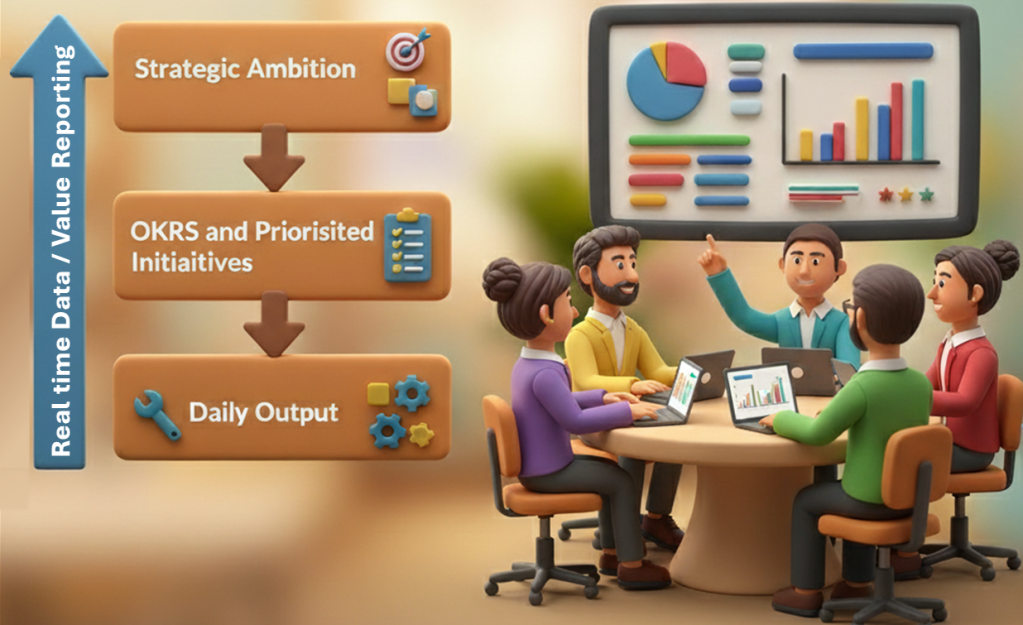
Visual representation of a team collaborating using data-driven strategies to enhance organizational performance.

The Need for Strategic Partnership

The ultimate value of any platform, whether it’s the Atlassian Stack or an existing bespoke system, is not unlocked through configuration; it is unlocked through comprehensive Transformation. This is a fundamental truth that holds whether your teams are using spreadsheets or a full suite of enterprise tools.

Partnering with a specialist ensures that the implementation leads with strategy, addresses cultural friction, and turns the technology investment into a genuine engine for sustained organisational success.

If your organisation is currently wrestling with the strategy-execution gap, or if your current tooling is generating friction instead of delivered value, a practical discussion is warranted.

Reach out to discuss your specific needs. Together we can design a pathway that actually gets your outcomes.

Categories
Agile success principles Change Management Delivery

Exploring the Benefits of a Product-Focused vs. Agile Team Approach: A Shift in Perspective

“The typical organization today has undertaken five major firmwide changes in the past three years — and nearly 75% expect to multiply the types of major change initiatives they will undertake in the next three years. Yet half of change initiatives fail, and only 34% are a clear success.”  Gartner.com

Key Differences

Benefits of Product-Focused Organisations

Product-focused organisations offer several advantages over traditional agile structures, including customer-centricity, cross-functional teams, prioritisation and focus, reduced handoffs, and empowered product ownership. These benefits significantly improve efficiency, product quality, and market responsiveness.

For instance, Schneider Electric successfully transitioned to a product-driven operating model at scale. This shift enabled them to increase the speed of their product delivery from five years to just 18 months and boosted employee engagement by eight percentage points. This example illustrates how adopting a product-focused approach can lead to faster development cycles, improved employee satisfaction, and better alignment with customer needs. Lessons from Schneider Electric’s Agile-at-Scale Transformation | BCG

Increased Customer-Centricity

Product development revolves around thoroughly understanding customer needs and desires. This ensures that the final product truly resonates with the target audience and effectively addresses their pain points.

Enhanced Cross-Functional Collaboration

Teams are composed of individuals with diverse skill sets, including design, engineering, marketing, and product management. This collaborative environment fosters a holistic understanding of the product and its lifecycle.

Improved Prioritisation and Focus

Clear product roadmaps are established, enabling teams to prioritise tasks effectively and maintain alignment with the overall product vision. This reduces wasted effort and ensures everyone is working towards a common goal.

Reduced Handoffs

Streamlined workflows minimise dependencies between different teams, leading to faster development cycles and reduced communication overhead. This efficiency gain contributes to quicker time-to-market and improved product quality.

Empowered Product Ownership

Dedicated product owners have greater autonomy and decision-making power. This allows them to be more responsive to customer feedback and market changes, leading to more successful products.

Enterprise Benefits

  • Reduced Costs: Streamlined workflows, reduced handoffs, and clear prioritisation minimise wasted effort and resources, leading to significant long-term cost savings.
  • Increased Revenue: Customer-centric products are more likely to succeed in the market, attracting and retaining customers and ultimately driving revenue growth.
  • Reduced Risk: A deep understanding of customer needs and market trends reduces the likelihood of developing products that fail to resonate with target audiences, minimising financial losses and reputational damage.

Employee Empowerment and Growth

  • Increased Employee Satisfaction: Employees feel a stronger sense of ownership and purpose when working within a product-focused organisation. They are more engaged in their work and feel their contributions directly impact the product’s success.
  • Improved Retention: A fulfilling work environment that provides opportunities for growth and development fosters employee loyalty and reduces turnover. This saves the company time and resources for recruiting and training new employees.
  • Clearer Career Paths: A product-focused structure provides employees with clear career trajectories and development opportunities, motivating them to contribute their best work and grow within the organisation.

Organisational Alignment: Defining Your Identity, Offerings, and Structure

In the journey towards adopting a product-focused approach, organisations must achieve clarity on three fundamental aspects: who they are, what they offer, and how they want to be organised. This alignment ensures that every team member works towards a common goal and that the organisation’s structure supports its strategic objectives.

Defining Your Identity

Understanding and articulating your organisation’s identity is the first step. This involves recognising your core values, mission, and vision. These elements serve as the foundation for all decisions and help create a cohesive culture. When everyone in the organisation understands and embraces these core principles, it fosters a sense of unity and purpose.

Clarifying Your Offerings

Next, it’s essential to understand what your organisation offers clearly. This means identifying your essential products or services and understanding how they meet your customers’ needs. By having a well-defined product vision, teams can align their efforts towards creating value for the customer. This clarity helps prioritise tasks and make informed decisions that drive the organisation forward.

Structuring for Success

Finally, determining how you want to be organised is critical for operational efficiency. A product-focused structure often involves cross-functional teams aligned with specific products or services. This setup encourages collaboration and reduces silos, enabling teams to work more effectively towards common goals. Empowering product owners with decision-making authority ensures that the organisation can respond swiftly to market changes and customer feedback.

The Benefits of Alignment

When an organisation is aligned on its identity, offerings, and structure, it reaps several benefits:

  • Enhanced Collaboration: Teams work together more effectively, breaking down silos and fostering a culture of cooperation.
  • Improved Focus: Clear priorities and a shared vision ensure everyone works towards the same objectives, reducing wasted effort.
  • Greater Agility: An aligned organisation can respond more quickly to market or customer needs changes, maintaining a competitive edge.
  • Increased Employee Engagement: Employees who understand the organisation’s mission and see how their work contributes to its success are more motivated and engaged.

Conclusion

Product-focused organisations offer a compelling alternative to traditional agile structures. They promote customer-centricity, streamlined workflows, and empowered product ownership. While agile methodologies remain valuable, adopting a product focus can further enhance organisational effectiveness, product success, and employee satisfaction.

If your organisation wants to improve its alignment with customer needs, increase efficiency, and empower your teams, consider transitioning to a product-focused approach. Start by defining your identity, clarifying your offerings, and structuring your teams for success. Doing so can create a strong foundation for sustainable growth and innovation.

Categories
Agile success principles Delivery Leadership Portfolio Management

Maximizing Delivery Success: The Power of Visibility, Proactive Dependency Management, and Strategic Roadmap Planning

In the fast-paced realm of program delivery, navigating interdependencies, anticipating upcoming challenges, and maintaining transparency across all levels of an organisation is crucial. This article explores the essential elements of effective delivery portfolio management: visibility, active dependency management, and a comprehensive upcoming roadmap, highlighting their significance in achieving success in delivering strategic outcomes.

Visibility: The Foundation of Trust and Alignment

Visibility in program and project management extends beyond tracking tasks. It involves providing clarity and transparency of program status, progress, and challenges to ensure every team member, stakeholder, and leader can access real-time information. This transparency is pivotal in nurturing trust, enabling informed decision-making, and aligning efforts towards strategic objectives. Tips to enhance visibility include:

  1. Implement Visual Management Systems: Utilise tools and platforms that offer real-time visibility into project statuses, progress, and challenges. For example, creating dashboards displaying key performance indicators (KPIs) and project milestones can assist stakeholders in staying informed and making data-driven decisions. These tools include Jira (Atlassian) and Azure DevOps (Microsoft). They are lightweight, cost-effective, and easy to scale across teams.
  2. Regular Planning Sessions and Stand-ups: Embrace agile practices such as fortnightly planning sessions and daily stand-ups to increase team transparency and alignment. This approach enables teams to align priorities and manage workloads effectively, creating a culture of openness and continuous improvement.
  3. Regular Planning Sessions and Stand-ups: Embrace working practices such as fortnightly planning sessions and daily stand-ups to increase team transparency and alignment. This approach enables teams to align priorities and manage workloads effectively. When incorporated with other practices that showcase work to obtain feedback and reflection to drive continuous improvement, teams go from being busy to delivering the right value.
  4. Mission Control Spaces: Establish dedicated visual management boards where project information is consolidated and centrally accessible. These boards provide easily understood information on progress, risks, and dependencies. Such physical or virtual boards create a single source of truth for always on project status, facilitating better decision-making and problem-solving. Examples of effective tools are Jira Align (Atlassian) and Miro.

Active Dependency Management: Navigating the Web of Interdependencies

Active dependency management involves proactively identifying, tracking, and resolving dependencies between tasks, teams, and resources to prevent bottlenecks and delays. The challenge lies in systematically identifying and resolving these interdependencies, necessitating a proactive stance to anticipate potential issues and devise mitigation strategies. Understanding each role and responsibility is crucial for effective dependency management to ensure unforeseen interdependencies do not derail projects.

  1. Map and Monitor Dependencies: Develop a systematic approach to identifying and tracking dependencies across projects. Tools like Jira Align can help visualise and manage dependencies to address potential bottlenecks proactively.
  2. Cross-Functional Collaboration: Nurture a culture of collaboration across different teams and departments. Encourage regular cross-functional meetings to discuss dependencies, share insights, and develop joint risk mitigation strategies. Approaches can also include co-creating solutions and leveraging shared resources to overcome challenges.
  3. Build an organisation around the flow of work: Organise teams into agile Tribes (programs) and Squads (teams) aligned around common objectives while minimising dependencies. This structure promotes autonomy and faster decision-making and reduces the complexity of managing interdependencies.

Upcoming Roadmap: Charting the Course Forward

An upcoming roadmap is not just a document outlining future directions; it’s a strategic tool that guides teams, clarifying priorities and expectations. It ensures that all efforts are aligned with strategic goals, facilitating a unified approach to achieving them. The roadmap serves as a beacon, guiding teams through the complexities of project delivery and ensuring that every step contributes towards the overarching objectives. Aligning the business roadmap with customer journeys and strategic initiatives is crucial for delivering value and securing a competitive advantage.

  1. Co-create roadmaps: Engage key stakeholders in the roadmap creation process to ensure strategic goals and priorities are aligned. This collaborative approach ensures that the roadmap reflects the organisation’s collective vision and objectives, enhancing buy-in and commitment.
  2. Quarterly Business Reviews (QBRs): Conduct QBR planning sessions to review progress against the roadmap, adjust priorities based on new insights, and set clear objectives for the upcoming quarter. This iterative process allows flexibility in responding to changes and ensures the roadmap remains relevant and aligned with strategic goals.
  3. OKRs and Performance Metrics: Implement Objectives and Key Results (OKRs) to link strategic goals with specific, measurable outcomes. This goal-setting framework helps track progress against the roadmap, ensuring efforts focus on achieving high-impact results.

In summary…

Visibility, active dependency management, and a well-defined forward-looking roadmap are crucial for successfully managing a delivery portfolio. These elements enhance operational efficiency and develop a culture of transparency, collaboration, and strategic alignment. By prioritising these aspects, organisations can navigate the complexities of project delivery with greater agility and predictability, ultimately driving better outcomes and value.