Categories
Dispersed Teams Portfolio Management

Beyond Jira: How Strategic Transformation (Culture, Not Configuration) Unlocks True Value in the Atlassian Stack

To successfully execute strategy at scale in today’s volatile market, an organisation must treat transformation as an integrated effort across three non-negotiable pillars: Culture, Process, and Tools. Failure to align any one pillar—what is known as the “Tool-Only Trap”—results in significant cost, resistance, and the ultimate strategic frustration: Good ideas die at scale.

The fundamental mistake is believing software alone delivers strategic alignment. True value, in the form of driving value and removing cost, is only unlocked when a deliberate methodology is applied to reshape organisational practices and mindsets.

To achieve this integrated success, the effort must be launched across the three pillars in deliberate sequence.

1 – Align Strategic Commitment and Mindset

The primary barrier to successful strategy execution is not technical; it is cultural. Alignment to what is most important requires a fundamental shift in mindset, driven by leadership commitment.

  • Change the DNA: Without a fundamental shift in culture, technological upgrades will ultimately be met with resistance and inertia.
  • Prioritise People: This means focusing on the fundamental ways your people interact and operate. Leadership must commit to communicating a clear strategic vision and the “why” behind every change. The focus must be on ensuring every team understands how their work contributes to the organisation’s core objectives.
  • Mandate Enablement Tooling: Consistent tooling must be implemented as an enabler of this strategic commitment, not a dictator. Expertise is required to ensure the platform supports an empowered culture, preventing the organisation from simply forcing people into a rigid software configuration with no purpose.

However, a committed culture alone cannot deliver strategy at scale; it requires a defined system of work to connect vision to daily activity.

2 – The Critical Bridge: Defining Practices for Execution

Process architecture is the critical bridge that translates a strategic mindset into repeatable, efficient actions that the technology can support. This focuses on creating a robust System of Work for reliable strategy execution.

  • Shared Language and Practices: The key outcome of adopting a structured approach is the creation of a shared organisational language and a common set of practices that are understood across all departments. This alignment is delivered by applying proven exercises designed to build consensus, clarify roles, and accelerate the adoption of new ways of working.
  • Delivering Clarity and Focus: This cultural work delivers essential organisational structure and ensures the team is focused on what is most important by providing:
  • Role Clarity and Alignment: Defined interaction models that clarify who is responsible for what, driving better communication and removing friction.
  • Targeted Capability: Identification of capability gaps and specific coaching needs, ensuring people have the skills to execute the new strategy effectively.
  • Process, Then Platform: The business must define how it wants to operate before the platform is configured, ensuring the practices are built into the tool, not dictated by it.

3 -Enabling Scale, Value, and Cost Reduction

Once the culture and process foundations are set, the integrated toolset becomes the powerful engine that delivers strategy at an enterprise level, directly contributing to business outcomes.

  • From Reporting to Strategy: Strategic execution demands a single source of truth to prevent work from being siloed. This is the explicit function of the Atlassian Strategy Collection tools.
  • Translating Vision to Work: Tools like Jira Align and Focus/Goals are engineered to provide a transparent and unbroken line from high-level strategic objectives (OKRs) down to the operational work of delivery teams. This is how the strategic ambition of the board is directly linked to the team’s daily output and ensures alignment to what is most important.
  • Value and Cost Reduction: The platform enables real-time monitoring of Key Performance Indicators (KPIs), providing the immediate feedback necessary to make sound, data-informed decisions. This level of responsiveness reduces project churn, minimises wasted effort (cost reduction), and ensures resources are focused exclusively on initiatives that drive maximum business value.
Visual representation of a team collaborating using data-driven strategies to enhance organizational performance.

The Need for Strategic Partnership

The ultimate value of any platform, whether it’s the Atlassian Stack or an existing bespoke system, is not unlocked through configuration; it is unlocked through comprehensive Transformation. This is a fundamental truth that holds whether your teams are using spreadsheets or a full suite of enterprise tools.

Partnering with a specialist ensures that the implementation leads with strategy, addresses cultural friction, and turns the technology investment into a genuine engine for sustained organisational success.

If your organisation is currently wrestling with the strategy-execution gap, or if your current tooling is generating friction instead of delivered value, a practical discussion is warranted.

Reach out to discuss your specific needs. Together we can design a pathway that actually gets your outcomes.

Categories
Agile success principles Change Management Leadership Product Management

Why Product Management Upskilling Matters

What separates companies with thriving product lines from those struggling to stay afloat? It’s not just luck. Forrester’s 2024 US Customer Experience Index research shows that prioritising customer experience, powered by strong product management, can unlock 4-8% higher revenue growth. However, without this focus, companies risk falling behind, missing crucial market opportunities, and wasting valuable resources on products that fail to resonate with customers. This article explores why investing in product management capabilities is crucial in today’s complex product landscape, where seamless collaboration, data-driven decisions, and adaptability are essential for success. We’ll delve into three key justifications for prioritising product management upskilling: optimising product outcomes, enhancing team effectiveness, and driving continuous improvement.
Upskilling is crucial for all product managers, though the focus varies by seniority. Early-career PMs benefit from training in user research and execution, while senior leaders need development in strategy and team leadership.

1 – Optimise Product Outcomes

It is imperative to build products that resonate with the market to achieve the desired market impact and business goals. These products must deliver demonstrable value to customers and contribute directly to strategic business goals. Product managers must have the skills to understand the needs and desires of their customers and what their competitors are doing to successfully provide solutions that are sufficiently differentiated and valuable to pique user interest.

Spotify Example: Spotify uses A/B testing to optimise the user experience, such as testing different playlist recommendation algorithms to maximise user engagement.

Market & User Understanding: Deepening knowledge of markets, users, and competitors

  • Market Research & Analysis: Use techniques like TAM/SAM/SOM analysis to size your market accurately. For example, a product manager launching a project management tool could combine bottom-up analysis with Gartner data to ensure a realistic understanding of market potential.
  • User Research: Employ both qualitative methods, such as user interviews and contextual inquiry, and quantitative methods, such as surveys and A/B testing. Conduct user interviews to uncover unmet needs, then validate findings with larger-scale surveys to ensure user-centred development. To truly understand customer needs, Christensen et al. (2016) emphasise the importance of going beyond traditional demographics and analysing the “jobs” customers are “hiring” products to do. This “Jobs to Be Done” framework focuses on understanding the underlying motivations and desired outcomes that drive customer behaviour. For example, a customer might “hire” a smartphone for communication, entertainment, social connection, and self-expression. By understanding these “jobs,” product managers can develop features and messaging that genuinely resonate with customer needs.
  • Competitive Analysis: Analyse competitors’ strengths, weaknesses, and strategies to inform strategic decisions about pricing, features, and target markets, leading to stronger market positioning. Product managers must also be adept at competitive analysis, identifying both direct and indirect competitors. By analysing competitors’ strengths, weaknesses, and strategies, they can identify opportunities for differentiation and develop unique selling propositions that resonate with target customers. Opportunities include offering unique features, superior performance, a more compelling brand story, or a more competitive pricing strategy.

“The most important thing is to get out of the building and talk to customers.” (Aulet, 2013)

Product Definition & Strategy: Defining winning strategies and actionable plans

  • Product Vision & Strategy: Define a clear and compelling product vision to align the team with business strategy and maximise long-term product success. For example, Tesla’s vision for sustainable energy permeates every aspect of its product strategy. This vision is evident in their relentless focus on improving battery technology, developing a comprehensive charging infrastructure, and offering over-the-air software updates that continuously enhance vehicle performance and features.
  • Product Roadmapping & Prioritisation: Use prioritisation frameworks like MoSCoW or RICE (Reach, Impact, Confidence, Effort) to ensure development focuses on high-value features, directly impacting ROI. RICE scoring allows objective feature comparison.
  • Product Requirements & Specifications: Precise documentation minimises ambiguity and rework.

Go-to-Market Execution: Improving product launches and market engagement

  • Go-to-Market Strategy: A well-defined go-to-market strategy ensures coordinated launches for maximum market penetration. Amazon often uses beta testing and phased rollouts.
  • Product Marketing & Messaging: Compelling messaging drives product adoption. However, even with strong messaging, poor execution can hinder success. A study by Repsly found that nearly 55% of promotions fail to impact sales due to poor execution. This failure highlights the importance of the product manager’s role in ensuring seamless go-to-market execution. (Repsly, n.d.)
  • Launch Execution & Performance Tracking: Product managers should track key performance indicators (KPIs) throughout the launch process to measure success and identify areas for improvement. These KPIs might include conversion rates (e.g., website visits to sign-ups), customer acquisition cost (CAC), user engagement metrics (e.g., daily active users, time spent on the app), and customer satisfaction scores (e.g., Net Promoter Score).

2 – Enhancing Team Effectiveness Maximising Collaboration and Communication

Product Managers are crucial in building high-performing teams by facilitating effective collaboration and communication across all functions.

Stripe, an emerging global payment service provider, sees Product Management capability as essential in creating the alignment to deliver at pace.
“Have you been able to sell a vision or product to your last company’s leadership team? What disagreements or conflicts did the PM have with engineering or design? How were these disagreements resolved? How does the PM actively build relationships with other parts of the organisation?… There is a natural tension between product, design, and engineering. Conflicts may arise naturally in a fast-paced environment. The key is how to build relationships to surmount disagreements and how to resolve conflicts if they do occur.”(Gil, 2018)

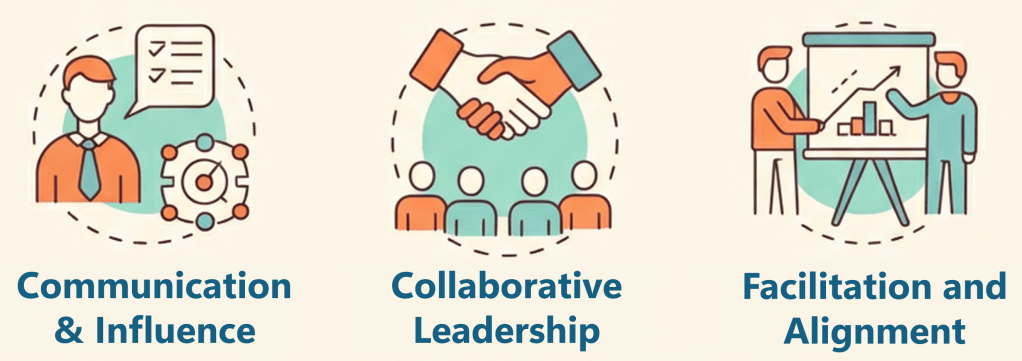
Communication & Influence: Mastering communication for stakeholder influence

  • Communication & Presentation Skills: Product managers must tailor their communication style to different audiences. When presenting to executives, they might focus on data-driven insights and ROI projections. When collaborating with engineers, they might delve into technical details and user stories. Emotional intelligence and empathy are also crucial for building strong relationships, understanding diverse perspectives, and navigating disagreements effectively.
  • Stakeholder Management: Effective stakeholder management ensures stakeholder alignment and reduces conflicts.
  • Negotiation & Conflict Resolution: Product managers should develop skills to navigate disagreements and maintain positive relationships.

Collaborative Leadership: Leading and motivating cross-functional teams

  • Cross-Functional Team Leadership: Effective cross-functional team leadership empowers product managers to motivate teams and achieve product goals. Effective product managers empower their teams by delegating responsibilities, providing autonomy, and recognising individual contributions. They foster a collaborative environment where open communication, constructive feedback, and shared decision-making are encouraged.
  • Meeting Management & Collaboration Tools: Effective meeting management techniques and collaboration tools improve team efficiency and communication.
  • Building Consensus & Alignment: Product managers should focus on ensuring a shared understanding of product goals.

Facilitation and Alignment: Driving shared understanding and agreement within the team

  • Facilitation Techniques: Use techniques like workshops, brainstorming sessions, and structured discussions to guide team conversations and effectively drive towards shared outcomes.
  • Cross-Functional Alignment: Proactively work to align different functional perspectives (e.g., engineering, marketing, sales) by clearly articulating the product vision, strategy, and roadmap.
  • Conflict Management and Resolution: Develop skills to effectively mediate conflicts and disagreements within the team, fostering a positive and productive working environment.

3 – Driving Continuous Improvement – Driving Innovation and Adaptability

In today’s dynamic market, continuous improvement through innovation and adaptability is essential for sustained success.

Tesla Example: Tesla uses over-the-air updates to continuously improve its products, demonstrating a commitment to ongoing value delivery.

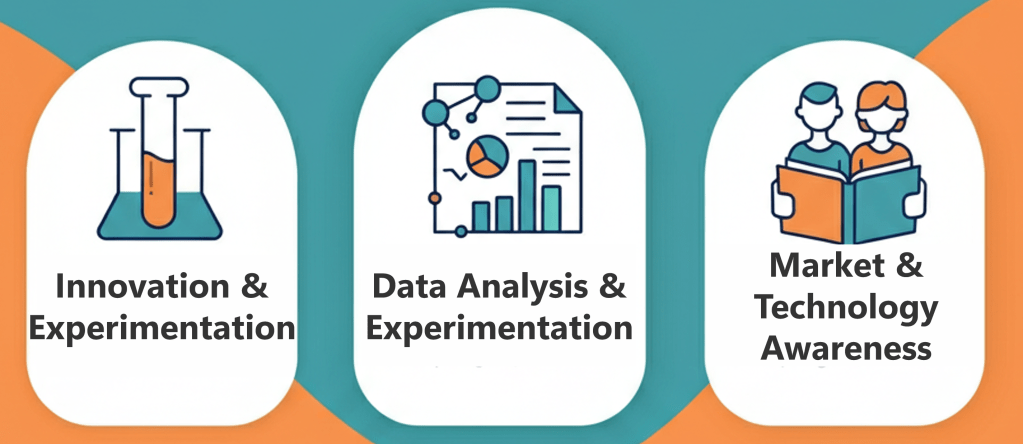
Innovation & Experimentation: Using data-driven approaches to validate ideas

  • Design Thinking & User-Centred Design: Applying design thinking ensures products are developed with a deep understanding of user needs.
  • Lean Startup & Agile Methodologies: Adopting lean startup and agile methodologies enables product managers to quickly test and validate ideas.
  • Data Analysis & Experimentation: Product managers should use data to optimise product performance (e.g., A/B testing landing pages). Continuous improvement relies on feedback loops and iterative development. Product managers should actively solicit customer feedback, analyse usage data, and conduct experiments to test and refine their products. For example, Amazon famously uses A/B testing to optimise its website and product pages, constantly experimenting with different layouts, messaging, and calls to action to improve conversion rates.

Market & Technology Awareness: Staying ahead of market trends

  • Emerging Technologies & Industry Trends: Staying informed about emerging technologies allows product managers to identify new opportunities and anticipate disruptions.
  • Competitive Monitoring & Benchmarking: Product managers should conduct competitive monitoring and benchmarking to gain insights into product strategy.
  • Continuous Learning & Knowledge Sharing: A commitment to continuous learning ensures product managers stay up-to-date with best practices.

4 – Measuring ROI: Demonstrating the Value of Product Management

Measuring product management activities’ return on investment (ROI) is crucial for demonstrating its value and securing continued support for these initiatives. However, as a Harvard Business Review study highlights, many executives lack confidence in accurately assessing product development ROI. This lack of confidence underscores the need for robust product management practices that track key metrics and demonstrate tangible impact. (HBR Analytic Services, 2019)
To effectively measure the ROI of your product management efforts, consider tracking these key areas:

Product-Specific Metrics:

  • Product Success Rate: The percentage of launched products that meet pre-defined success criteria (e.g., achieving target revenue, user adoption, or market share).
  • Time to Market: The time it takes to bring a product from ideation to launch, reflecting the efficiency of the product development process.
  • Customer Satisfaction: Measured through metrics like Net Promoter Score (NPS), Customer Satisfaction Score (CSAT), and customer reviews, indicating how well the product meets customer needs.
  • Feature Adoption Rate: The percentage of users adopting and actively using specific features, highlighting the value and effectiveness of product enhancements.
  • Revenue and Profitability: Track the direct revenue generated by the product, as well as its contribution margin and profitability.

Team-Related Metrics:

  • Team Performance: Assess the product team’s effectiveness through metrics like sprint velocity (in Agile development), on-time delivery, and achievement of sprint goals.
  • Employee Satisfaction and Retention: Measure employee engagement, satisfaction, and retention within the product team, reflecting the impact of leadership and development initiatives.

Customer-Focused Metrics:

  • Customer Acquisition Cost (CAC): The cost of acquiring a new customer that can be reduced through effective product-led growth strategies.
  • Customer Lifetime Value (CLTV): The predicted net profit attributed to a customer’s future relationship that can be increased through product enhancements and customer retention efforts.
  • Churn Rate: The rate at which customers stop using the product, indicating areas for improvement in product value or customer engagement.

By consistently tracking and analysing these metrics, product managers can demonstrate the tangible impact of their work, justify investment in product management capabilities, and drive continuous improvement within their organisations.

Elevate your product team and maximise your product development ROI. Contact me to discuss a customised training program.

Bibliography

Aulet, B. (2013). Disciplined Entrepreneurship: 24 Steps to a Successful Startup. HBR Press.

Gil, Elad. High Growth Handbook. Accessed via Stripe Atlas https://www.forbes.com/sites/quora/2012/12/10/does-stripe-have-product-managers-or-do-engineers-manage-the-products-themselves/

HBR Analytic Services. (2019). Closing the Data Gap in Product Development. Harvard Business Review.

Categories
Change Management Leadership

How to Make Change Stick in Your Organisation

Organisational transformations are complex undertakings, often involving significant changes to processes, systems, and culture. While the initial excitement and momentum can generate early wins, the real challenge lies in sustaining these changes and ensuring they become deeply embedded in the organisation’s DNA. To truly lock in your transformation investment and reap the long-term rewards, focus on these three critical areas:

Scenario: Imagine “Sunnies & Shades”, a fictional, mid-sized Aussie retailer specialising in sunglasses and prescription eyewear with stores across the country. They’re undergoing a significant transformation, aiming to shift from a traditional brick-and-mortar retailer to a more integrated online and offline experience. This shift involves a new e-commerce platform, in-store digital kiosks, and a revamped customer loyalty program. But like any good transformation, it’s not just about the initial launch; it’s about making those changes stick.

Build a Culture of “Always Improving”

A successful transformation requires a culture that embraces continuous improvement, where employees at all levels are empowered to identify opportunities, contribute ideas, and adopt new ways of working. This change can be particularly challenging when introducing new technologies or digital tools, as it requires a shift in mindset and a willingness to embrace change. Not only does this drive ongoing improvement and innovation, but it also helps attract and retain top talent who thrive in dynamic and forward-thinking environments.

  • Give Your People the Power: Empowering employees to participate in the transformation process is crucial because when individuals feel a sense of ownership and are actively involved in shaping the change, they are more likely to embrace it and contribute to its success. Empowerment means involving them in decision-making, encouraging them to share their ideas, and giving them the autonomy to experiment with new approaches. This involvement starts people planning how they will change what they do and positions them to be more prepared for the upcoming changes.
  • Get Feedback Regularly: Establish robust feedback mechanisms to gather insights from employees, customers, and other stakeholders. This feedback loop is essential for identifying areas for improvement, addressing concerns, and ensuring the transformation stays on track. By actively listening to feedback, organisations can make necessary adjustments and ensure the transformation remains aligned with the needs of the business and its stakeholders.
  • Never Stop Learning: Invest in ongoing training and development to equip your workforce with the skills and knowledge needed to thrive in the transformed organisation. This investment is vital because transformations often introduce new technologies, processes, and ways of working, for which employees need the capability to adapt and excel in this new environment. Learning can involve a combination of formal training programs, mentoring, online resources, and on-the-job coaching. Ideally, the change you implement has a ripple effect and can initiate further improvements. Introducing new technology can unlock further opportunities, which teams can capitalise on with appropriate learning.

For success, Sunnies & Shades needed comfortable and enthusiastic staff to use new digital tools to enhance the customer experience. Sunnies & Shades knew getting their team on board with their digital transformation was crucial. They set up staff forums and an online portal for feedback on the new systems, ran surveys, and held focus groups to ensure they considered and addressed everyone’s concerns. They also encouraged staff to experiment with the new technology and ran an internal competition to spark innovation. To top it off, they provided comprehensive training and ongoing support to ensure everyone felt comfortable using the new tools. The training acknowledged the value of previous ways of working while highlighting the benefits of the new processes to enable a smooth transition and minimising ambiguity.

Through developing a culture of continuous improvement, organisations can ensure that the changes implemented are not merely temporary fixes but become ingrained in their operations.

Make the Changes Stick

Transformations often involve significant changes to processes, systems, and behaviours. To ensure these changes are not just fleeting initiatives but become deeply embedded in the organisation, they must be reinforced and integrated into the fabric of everyday operations. This integration is essential because without consistent reinforcement, old habits can quickly resurface, and the momentum of the transformation can be lost. Crucially, this requires strong leadership buy-in and role modelling, with leaders actively demonstrating their commitment to the new ways of working.

  • Make it Part of Everyday Life: Integrate the changes into daily routines and workflows. This change can include updating job descriptions, redesigning workspaces, and incorporating new technologies into standard operating procedures. This integration is essential because it ensures that the new working methods become the norm rather than an exception.
  • Keep the Communication Flowing: Maintain open and transparent communication channels to inform employees about the transformation’s progress, address concerns, and celebrate successes. Consistent communication is crucial for building trust, maintaining momentum, and ensuring everyone is aligned with the transformation’s goals.
  • Shout Out Successes: Acknowledge and celebrate both big and small wins throughout the transformation journey to maintain momentum, build confidence, and reinforce positive behaviours. Celebrating successes reinforces the value of the transformation and motivates individuals to continue embracing the change.

For Sunnies & Shades, this meant making the new digital tools and processes a seamless part of their customer and employee experience. They went all-in on their digital makeover. They redesigned their stores with interactive kiosks for customers to try on glasses virtually and updated their staff uniforms to match their new vibe. To keep everyone in the loop, they held regular “sundowner” sessions and used their intranet to provide updates, informally discuss concerns and share success stories. The leadership team actively participated in these sessions to demonstrate their commitment to the transformation and used the new digital tools themselves. They also gave kudos to their “Digital Stars” – staff who nailed the new tech – and shared good customer feedback online.

Organisations can create a lasting legacy for their transformation efforts by planning steps to reinforce and embed the changes.

Track Your Progress

Establishing a robust measurement and monitoring framework is essential to ensuring your transformation is on track and delivering the desired results. This involves setting clear goals, tracking progress, and using data to inform decision-making. Tracking progress is crucial because it allows organisations to measure their efforts’ effectiveness, identify improvement areas, and demonstrate the value of the transformation to stakeholders.

  • Set Clear Goals: Define specific, measurable, achievable, relevant, and time-bound (SMART) goals for the transformation to provide a clear roadmap and a benchmark for measuring success. Clear goals provide direction and focus for the transformation, ensuring everyone is working towards the same outcomes.
  • Regularly Check In and Analyse: Regularly monitor and analyse performance data to assess the transformation’s effectiveness and identify improvement areas. Regular monitoring and analysis allow for adjustments to the transformation strategy and plan, ensuring it remains aligned with the evolving needs of the business.
  • Harness the Power of Data: Leverage technology to gain a comprehensive understanding of your transformation’s impact. Utilise data analytics platforms and business intelligence tools to track key metrics and visualise progress. This visualisation makes information accessible to stakeholders, facilitating focused discussions and informed decision-making. Ultimately, technology provides valuable insights into the transformation’s effectiveness and identifies areas for optimisation.

For Sunnies & Shades, tracking progress was crucial to understanding the impact of their digital transformation on key metrics like sales, customer satisfaction, and loyalty. Sunnies & Shades set clear goals for its transformation, like boosting online sales and growing its loyalty program. They used web analytics, in-store data, and an interactive business intelligence dashboard to keep tabs on their progress. Ready access to this information gave them a complete picture of how they were tracking and helped them spot any trends or areas for improvement in their monthly review meetings.

By diligently tracking progress, organisations can ensure their transformation stays on course and delivers the desired outcomes.

Conclusion

Transformations are not merely about implementing new initiatives; they are about creating lasting change. Organisations can lock in their transformation investments and reap long-term rewards by curating a culture of continuous improvement, embedding changes into daily operations, and diligently tracking progress.

Lessons from Sunnies & Shades – The Sunnies & Shades scenario highlights the importance of a holistic approach to transformation. Sunnies & Shades demonstrates how to successfully navigate the complexities of organisational change and build a sustainable future by actively involving staff, celebrating successes, and continuously adapting to the business’s evolving needs.

Categories
Change Management Delivery Leadership

Digital Transformation Success: Key Steps and Remember the People

Digital change is no longer a choice; it’s a necessity. In today’s fast-paced business environment, staying competitive and relevant hinges on embracing digital transformation. But navigating this ever-evolving landscape can feel overwhelming. To truly succeed, organisations need to focus on three core elements: understanding their people, being clear on what they are trying to change, and having a plan.

1. Understand Your People: The Heart of Digital Transformation

Before diving headfirst into new software or platforms, take a step back and truly understand your people. It’s crucial to know what they do. Understand what they think the purpose of their work is. Learn what their daily tasks involve. This understanding will help you determine if what they are trying to do is needed. You may find an opportunity to eliminate a process. You might automate it entirely or make the human intervention more valuable.

  • Empathy is Key: Observe how your employees currently work. Understand their pain points, what they do not want to change, and why. Identify areas where technology can streamline tasks, reduce frustration, and unlock more significant potential.

For example, consider a financial institution implementing a new digital loan processing workflow. Initially, employees resisted the change, fearing it would complicate their tasks. The institution’s leadership conducted interviews. They observed the employees’ daily routines. They discovered that employees struggled with redundant data entry and cumbersome approval processes. The employees’ workload was significantly reduced by introducing an automated system that eliminated these inefficiencies. This change improved job satisfaction. It also sped up the loan approval process. Both the staff and the customers benefited from these improvements.

  • Purpose and Motivation: Engage with your employees to understand what they think the purpose of their work is. This engagement is not just a conversation, it is an essential tool in building your strategy. It’s a way to involve your staff in the digital transformation process, making them feel more connected and motivated. Knowing their motivations can help align digital transformation efforts with their goals and aspirations.
  • Tool Preferences: Find out why employees like or dislike their current tools. This insight can guide the selection of new tools that better meet their needs and preferences. To gather this information, consider using surveys or focus groups. Surveys can provide quantitative data on employee satisfaction with current tools. Focus groups can offer deeper qualitative insights by allowing employees to discuss their experiences and preferences in more detail. Be aware of peer pressure and groupthink when collecting data, look for outliers and trends and try to understand the root cause of each.
  • Concerns and Aspirations: Listen to your employees’ concerns and aspirations. Address their worries about the changes and highlight how the new technology can help them achieve their professional goals. This will make them feel valued and considered, enhancing security and trust in the process.
  • Collaboration is Crucial: Involve your team in the digital transformation process. Seek their input, address their concerns, and ensure they feel heard and valued throughout the transition. This will make them feel involved and integral to the change, increasing a sense of ownership and commitment.
  • Training is Essential: Provide comprehensive training. Offer ongoing support to equip your employees. They need skills and confidence to thrive in the new digital environment. Implement varied training methods, such as interactive workshops, online courses, and one-on-one coaching sessions, to cater to different learning needs. This multifaceted approach ensures that all employees feel well-equipped and confident, creating a sense of empowerment and readiness for the change. Equally important is involving key team members in co-developing the training programs. This collaboration ensures that the training addresses real, rather than perceived, needs and incorporates practical insights from those who understand the day-to-day challenges. Ongoing support, including regular check-ins and a dedicated helpdesk, will encourage a culture of continuous learning and adaptation, which is crucial for long-term success.

By prioritising your people and understanding their work, you’ll create a culture of adoption. This will lead to innovation. These efforts drive the success of your digital transformation.

2. Be Clear on What You Want to Change: Laying the Groundwork for Transformation

Before embarking on a digital transformation journey, it is crucial to know exactly what needs to be changed. Understanding why these changes are necessary is equally important. This clarity will ensure you address the right problems with the right solutions, setting the stage for a successful transition.

  • Identify Where Change is Needed: Conduct a thorough process audit to pinpoint inefficiencies and areas requiring improvement. Understanding these core issues will help determine the necessary changes and ensure they address the real problems.
  • Articulate What Needs to Change: Before implementation, carefully evaluate potential solutions. Ensure the chosen technology or process changes are the best fit for your organisation’s needs and objectives. Clearly communicate the specific changes required and how they will be implemented. Make sure everyone knows exactly what is being asked of them.
  • Understand the Impact on People: Understand and explain the impact of these changes on your team, workflows, and overall operations. Be prepared to address any challenges that may arise during the transition. Articulate how addressing these issues will benefit the organisation and improve workflows while enhancing individual roles. This ensures everyone understands the positive impact the changes will have on their work.
  • Consider the Implications: Fully understand what will be involved in making these changes. Consider the impact on your team, workflows, and overall operations. Be prepared to address any challenges that may arise during the transition period.
  • Set Clear Objectives: Communicate the specific objectives of any changes and how they will impact individuals within the organisation. For instance, explain how a new digital tool will streamline their daily tasks, reduce manual errors, or enhance their productivity. Clearly defined objectives should resonate at a personal level, making it evident how these changes will benefit them directly.

For example, success may look like a smoother workflow with fewer manual interventions. When employees understand the transformation’s personal advantages, they are more likely to embrace and champion the change and provide feedback on modifications to drive further refinement and improvement.

Be clear on what you want to change and know why it is essential. This ensures you solve the right problem with the right solution. This foundational step is essential before planning and engaging your team in the transition process.

3. Have a Plan: Mapping the Route to Success

Digital transformation requires a well-defined roadmap. A clear plan is essential to ensure a smooth transition and minimise disruption.

  • Outline Key Milestones: Break down the transformation process into manageable phases with specific goals and deadlines for each stage.
  • Define Roles and Responsibilities: Identify who is responsible for each aspect of the transformation and ensure everyone understands their role in the process.
  • Establish Communication Channels: Determine how information will be shared and feedback gathered throughout the transformation journey.
  • Develop a Training and Support Strategy: Provide resources and support to help employees adapt to the new technology and processes.
  • Measure Success: Define key performance indicators (KPIs) that align with your transformation objectives. Regularly evaluate your progress against these metrics. Create a clear pathway for your team. Actively manage the transformation process. This approach will set your team up for success and minimise potential roadblocks.

In conclusion, navigating digital change requires a strategic approach. It should prioritise understanding your people. It is essential to define clearly what needs to be changed. Having a well-structured plan is also crucial. By focusing on these three core elements, organisations can create a culture of adoption. This approach encourages innovation. It ensures a successful digital transformation. Remember, the heart of any transformation lies in the people who drive it. Engage with your employees, address their concerns, and provide the necessary support to empower them in this journey. With a clear vision and a collaborative effort, digital change can significantly improve efficiency, customer engagement, and overall business success.