Categories
Change Management Delivery Leadership Portfolio Management

Are you Sabotaging Your ROI? Why You Need to Sweat the Small Stuff like Role Titles

Operating model design: sounds fancy, right? People often get caught up in process flows, org charts, and the nitty gritty. But are we missing the forest for the trees? I’m talking about something seemingly small but packing a surprisingly big punch: role titles. Think they’re just labels? Think again. In today’s brutal ROI environment, your role titles either drive your success or quietly kill it.

McKinsey highlights that improved communication and collaboration through social technologies could boost the productivity of interaction workers by 20-25%*

The critical point often missed is that technology alone isn’t the magic bullet. To realise those communication benefits and make that productivity jump, your organisation must make it easy to connect with the right people – the ones who can actually solve problems and drive value. And that’s where clear role titles become indispensable. Without them, even the best social technologies amplify the noise and confusion, increasing the speed and scale of non-productive and distracting communication.

Let’s be blunt. Even simple tasks can get derailed when you can’t figure out who to talk to in other parts of the company. Things get stuck, and time is wasted on basic stuff. Part of the problem? Fuzzy role titles. It’s not just about who’s in charge of projects; it’s about knowing who’s responsible and contactable across all parts of the company, even for everyday needs. The bottom line? Role titles matter if you want to get things done effectively across your organisation. Here’s why:

1. Titles Set the Tone: It’s All About Value (and ROI)

“What’s in a name?” Shakespeare might have been onto something but in business? Everything. Your role titles scream what you value as an organisation and, just as importantly, what you bring to the table. Forget fluffy language. We need titles that communicate value, impact, and ROI contribution, plain and simple.

  • Value = ROI. Titles Need to Show It: Remember “Scrum Master”? Nice for driving process, but today, the needs are broader and expectations higher! Try “Delivery Lead,’ or even “Delivery Coach” – titles that shout, “I deliver value!” If you want a different flavour, try “Delivery Coach” or “Value Coach”. It’s about outcomes, not just ceremonies. It’s about ROI, not just running meetings. Your titles should be value declarations. The HBR article, “How to Ask for the Job Title You Deserve,” says your title is your value pitch. Your role title tells your colleagues how you add value and why they should work with you.
  • Scope, Authority, Impact – Titles Define Your Turf: “Delivery Lead” isn’t just a fancy Scrum Master. It says, “I own value delivery.” Clarity = empowerment. You know your impact and focus on what matters: driving ROI. No more guessing games about who’s responsible for what. Titles don’t replace RACI; they amplify it. They make responsibilities stick and impact resonate, day in and day out. Titles should define your impact zone.
  • Perception is Reality. Titles Drive Performance: Titles shape how individuals see themselves and prioritise their efforts. When it comes to titles, perception is reality, and as HBR points out, your title is “what you do.” A solid title provides an instant understanding of your expertise. “Data Scientist” specialising in predictive modelling? Boom. People get it. Need predictive modelling? They find you. Faster connections, faster projects, faster ROI. Titles aren’t just for show; they are about speed and efficiency, helping you “build rapport” and get down to business fast.

2. Same Titles, Same Page: Collaboration That Delivers Value

Unclear roles breed chaos, and chaos erodes ROI. Consistency in titles? That’s your secret weapon, especially when scaling up or transforming your organisation. Consistent role titles are like speaking the same language. Suddenly, collaboration isn’t a headache; it’s how you get things done and deliver value faster.

  • Collaboration = Value Delivery. Consistent Titles = Collaboration: One team’s “Delivery Lead” needs to be the same as the “Delivery Lead” in another. No translation is needed. Cross-functional teams? Complex projects? Consistent titles are your glue, making collaboration work and driving value across the board.
  • Cut the Confusion, Boost the Outcomes: Standardised titles kill ambiguity. Everyone knows what a “Delivery Lead” does. Less explanation of roles means more discussion of strategy and hitting those value targets. Straight to the point, straight to the outcomes.
  • Find the Right People, Fast (Internal & External): Need someone who gets value delivery? Consistent titles are your search terms. Internally and externally, finding the right skills becomes way more manageable. Talent acquisition for ROI? Consistent titles are non-negotiable. Before you even think about a title change, do your homework. LinkedIn, Glassdoor – check industry norms. Speak the same title language or get left behind.

3. Talent Magnet: Titles That Attract (and Keep) Value-Obsessed People

Top talent isn’t just looking for a job but for impact. They want to drive value, and they want titles that reflect that ambition. Get your titles right, and you’ll attract the people who will move the ROI needle.

  • Market Demands Value-Driven Titles. Give Them What They Want: Product Management, Agile Delivery – these people know their worth. They expect titles that match their skills and ambition. “Delivery Lead” attracts value-focused players. Attract the right talent and drive the right results.
  • Career Paths That Show Value Growth: No career path? No talent retention. Clear title progression – Delivery Lead to Delivery Manager, Product Owner to Product Manager – shows growth, opportunity, and value progression. Ambitious people want to see how they can level up their value contribution. Show them the path and keep the top performers.
  • Employer Brand = Value-Centric Culture: Value-driven titles build a value-driven employer brand. Signals you’re serious about ROI. Top talent wants to make a real difference, not just fill a seat. Titles that scream “value” attract people who deliver value. Dan Cable from London Business School gets it: titles are “symbolic representation of…value.” Margaret Neale of Stanford calls titles part of the “compensation package.” It’s not just about the money; it’s about the title that opens doors and builds careers.

Return On Investment is the Name of the Game

Economic pressure is real. ROI isn’t a buzzword; it’s survival. That’s why roles like “Delivery Lead” are front and centre. These aren’t just trendy titles but are essential for ensuring projects deliver business value. Remember the Scrum Master vs. Delivery Lead shift? Scrum Master = process. Delivery Lead = outcomes. ROI demands outcomes. Delivery Leads are measured by impact, not just activity. They track the value of retrospectives, not just that they happened. This title shift? It’s about a fundamental shift to tangible business value. Get the titles right and get the people who drive ROI.

To gain improved communication benefits from technology, your organisation needs to make connecting with the right people easier. Failure to do so increases the speed and scale of non-productive and distracting communication.

  • Fuzzy titles cause communication breakdowns whilst wasting time, effort, and money.
  • Clear titles create a transparent operating model with a clear path to ROI.

Are your role titles driving the ROI you desperately need? Probably not if you haven’t thought this through. Ready to stop sabotaging your success? Connect with me, Steve Walton, and let’s talk.

*https://www.mckinsey.com/industries/technology-media-and-telecommunications/our-insights/capturing-business-value-with-social-technologies

Categories
Coaching Leadership Portfolio Management

Is Your Coaching Actually Working? Stop Wasting Money and Start Seeing ROI with Targeted Interventions

Let’s be honest. Coaching can be expensive. And sometimes, it feels like you’re throwing money at a problem without seeing any real change. You’ve got well-meaning conversations, maybe even some nice-looking documents called “coaching plans,” but are they actually driving results? Are they making a difference to your team’s performance, your bottom line, or your organisational culture? If you’re not sure, you’re not alone. Many leaders struggle to demonstrate the ROI of their coaching efforts. They invest in coaching, hoping for the best, but lack the tools to measure its impact effectively. The missing piece? Targeted interventions.

The International Coaching Federation estimates that over two billion US dollars annually is invested in workplace coaching worldwide

(Cannon-Bowers JA, Bowers CA, Carlson CE, Doherty SL, Evans J, Hall J. Workplace coaching: a meta-analysis and recommendations for advancing the science of coaching)

Why Coaching Plans Matter (But Targeted Interventions Matter More)

A coaching plan should be a roadmap for development. It should provide clarity, focus, and a framework for meaningful conversations. But without a clear focus on targeted interventions, it’s like having a map without a destination. It’s just a document. A genuinely effective coaching plan that justifies the investment must detail how the coach will support the coachee, what specific actions they will take, and what the expected outcomes are. Here’s why focusing on targeted interventions is crucial:

  • Targeted Development – Hitting the Mark: A coaching plan should pinpoint specific growth areas tied directly to the organisation’s needs. It’s not enough to say “improve leadership.” We need to identify what kind of leadership skills need to be developed and how that will contribute to business goals. Targeted interventions allow us to address those specific needs directly.
  • Structured Conversations and Strategic Interventions – Driving Real Change: The plan needs to outline the specific interventions the coach will use. The agreement on intervention actions is where the rubber meets the road. These might include mentoring, training, shadowing, facilitating specific exercises, or providing targeted feedback. These interventions are the active ingredients of effective coaching.
  • Progress Tracking – Showing Real ROI, Not Just Good Intentions: Tracking interventions lets you see what’s working and what’s not. It’s how you measure the impact of your coaching and demonstrate its value to the bottom line. This data-driven approach is essential for justifying coaching investments and proving ROI.
  • Accountability – For Everyone Involved, and for the Interventions Themselves: A well-defined plan with tracked interventions keeps both the coach and the coachee accountable. It sets clear expectations and provides a record of the coach’s actions and support. It also allows you to evaluate the effectiveness of the interventions themselves.

Leveraging Coaching Models – The Framework for Success

Established coaching models give you a structured way to approach coaching conversations and choose the most effective targeted interventions. Here are a few key models:

  • GROW Model: This widely used model focuses on goal setting, examining current reality, exploring options, and establishing the will to act. In the context of targeted interventions, GROW helps ensure interventions are directly linked to the coachee’s goals and the reality of their situation, making the chosen actions highly relevant and impactful. (GROW stands for Goal, Reality, Options, Will).
  • OSKAR Model: OSKAR builds on solution-focused principles, emphasising desired Outcomes, understanding the current situation, exploring Solutions and Options, knowing the Key Actions, and Reviewing progress. OSKAR’s emphasis on desired outcomes and solutions helps coaches and coachees collaboratively identify targeted interventions that are future-focused and designed to move towards specific, positive results. (OSKAR stands for Outcome, Situation, Knowledge, Affirm + Action, Review).
  • FUEL Model: This model emphasises a conversational approach focused on Framing the conversation, Understanding the current situation, Exploring desired outcomes and generating ideas, and Laying out an action plan. The FUEL model’s emphasis on exploration and action planning directly supports identifying and implementing targeted interventions. By ‘Exploring’ options within the FUEL framework, coaches and coachees can collaboratively determine the most relevant and impactful targeted interventions to include in their action plan (‘Lay out a plan’). (FUEL stands for Frame, Understand, Explore, Layout plan).
Sample coaching plan, based on the GROW model

A coaching plan that delivers tangible results needs more than just good intentions. Here’s what goes into it:

  • Clear, Measurable Objectives – Tied to Business Outcomes: (As before, but emphasise the need for quantifiable outcomes tied to interventions and business goals)3
  • Context & Background – The Business Challenge: (As before, but emphasise the link to business challenges and how coaching can address them)
  • Strengths & Areas for Development – Linked to Targeted Interventions: (As before, but emphasise how these relate to specific interventions and business needs)
  • Strategies & Actions, including Specific, Targeted Interventions: This is the heart of the matter. Detail the exact, targeted interventions the coach will use. For example, instead of “Improve communication skills,” the plan might say, “Coachee will participate in a role-playing exercise focused on difficult conversations, followed by targeted feedback from the coach on active listening and assertive communication techniques.”
  • Timeline & Milestones – Linked to Intervention Completion and Business Impact: (As before, but tie milestones to intervention completion and their expected impact on business outcomes)
  • Metrics & Measurement – Proving the ROI of Targeted Interventions: This is how you prove Return On Investment. How will you measure the success of the specific, targeted interventions? If the goal is improved communication, the metric might be “360-degree feedback scores” or “reduction in team conflict incidents.”
  • Review & Feedback – On Targeted Interventions and Their Contribution to Business Goals: Regularly review progress and specifically discuss the effectiveness of the targeted interventions. Are they having the desired impact on both the individual and the business? Do they need to be adjusted?

Download our sample coaching plan in Word format

The Coaching Plan Advantage: Driving Real ROI and Demonstrating Value

In today’s business climate, being able to design and use coaching plans with targeted interventions and measurable ROI is a must-have skill for any leader. It’s how you show the value of coaching and drive demonstrable business results. It’s how you move beyond “feel-good” conversations and demonstrate a tangible return on investment that justifies the cost and earns you recognition as a leader who gets results.

Conclusion:

Coaching plans, when they include specific, targeted interventions and measurable outcomes directly linked to business goals, are powerful tools for driving growth and achieving demonstrable and valuable business results. They’re not just about having a chat; they’re about making a difference that matters. So, if you’re tired of wondering whether your coaching is actually working, focus on targeted interventions. It’s the key to unlocking real ROI and transforming your coaching from a cost to a valuable investment.

(Connect with me on LinkedIn to discuss coaching and leadership!)

Categories
Change Management Coaching Delivery Leadership Product Management

Why “Why” Matters More Than the Plan Itself

We’ve all been there. You spend weeks meticulously crafting a detailed plan, complete with timelines, milestones, and every conceivable contingency. It’s a comprehensive document, a testament to your planning prowess. But then, reality hits. Things change. Unexpected challenges arise. And suddenly, that carefully laid-out plan feels more like a straightjacket than a guide.

This is a common pitfall. We often get so caught up in the act of planning – the spreadsheets, the Gantt charts, the endless meetings – that we lose sight of the bigger picture. We treat the plan as an end in itself, rather than a means to an end. This can lead to a rigid approach that fails to adapt to changing circumstances, rendering the plan ineffective.

But what if I told you that the most critical part of any plan isn’t the plan itself, but the ‘why’ behind it? Understanding the ‘why’ empowers you, giving you a sense of control and confidence in your planning process.

Before you dive into the nitty-gritty of timelines and deliverables, take a step back. Ask yourself:

  • Is it to inform stakeholders and enable governance, providing transparency and ensuring alignment with broader organisational objectives?
  • Is it to coordinate delivery teams, ensuring no gaps and that dependencies are managed and driving smooth execution?
  • Is it to enable a team to align and collaborate, fostering a shared understanding of goals and responsibilities?
  • Is it to help a leader and contributor achieve personal development goals, outlining clear objectives and action steps for growth?
  • Is it for a coach to provide a structured approach to achieving growth outcomes for the coachee, outlining a clear framework for development and progress tracking?
  • How will we know if we’ve achieved our goals?
  • What key metrics will we track?
  • What could go wrong?
  • How can we minimise these risks?

By clearly defining your plan’s purpose and desired outcomes, which are rooted in the ‘why ‘, you create a strong foundation for success. You’re not just creating a document; you’re setting a direction.

It’s easy to fall into the trap of treating a plan as an isolated document, a static blueprint to be followed religiously. However, effective plans are more than just a collection of tasks and deadlines. They exist within a broader context, interconnected with other crucial elements that drive outcomes. A plan should be viewed as a dynamic tool that guides actions and decisions.

Think of a plan as a single piece of a complex puzzle. It must fit seamlessly with other key pieces to create a complete picture. These interconnected elements might include:

  • Strategic Objectives: Your plan must align with your team or organisation’s overall strategic direction. Displaying when these objectives are achieved in your plan provides an easily accessible link between your actions and the overall goal.
  • Detailed plans: It is essential to communicate and coordinate areas such as delivery planning, resourcing, communications, change management, and risks. High-level plans should be created with a common language and touchpoints so that, where required, you can dive deeply into the details while also communicating the big picture.
  • Audience-specific plans: Not every audience is the same. You may need to create different versions of your plans to address specific interest groups. Ideally, these are filtered or summarised versions of your detailed plans that provide timely, accurate, and relevant information pitched to drive the appropriate level of engagement with your audience.

By considering these interconnected elements, you can create a more robust and effective plan that drives meaningful outcomes.

The best plans are flexible. They’re not rigid blueprints meant to be rigidly adhered to. Instead, they’re living documents that evolve and adapt as circumstances change.

  • Embrace the Unexpected: Things rarely go exactly as planned. Be prepared to adjust your course, pivot when needed, and learn from setbacks.
  • Encourage Feedback: Regularly seek feedback from your team and stakeholders. Are you on track? Are there any unforeseen challenges? Are there opportunities to improve the plan?
  • Use Data to Guide Decisions: Track progress, analyse data, and use insights to inform your next steps. Are you making progress towards your goals? If not, what adjustments need to be made?

It’s easy to get caught up in the planning process itself. We can spend so much time analysing and re-analysing the plan that we never actually get around to executing it. This is what I call “plan-itis”.

  • Analysis Paralysis: Spending excessive time analysing and re-analysing the plan can lead to inaction.
  • Resistance to Change: Overreliance on the original plan can make adapting to new information and changing circumstances difficult.

Ultimately, the success of any plan should be measured by its ability to deliver the desired outcomes. Remember, the plan is a tool, a guide, a framework – not an end in itself.

So, the next time you find yourself deep in the weeds of a planning exercise, take a moment to step back. Ask yourself: “Why are we doing this? What are we trying to achieve?”

By firmly considering the “why,” you’ll be better equipped to create effective plans that deliver real results.

Categories
Agile success principles Change Management Leadership Product Management

Why Product Management Upskilling Matters

What separates companies with thriving product lines from those struggling to stay afloat? It’s not just luck. Forrester’s 2024 US Customer Experience Index research shows that prioritising customer experience, powered by strong product management, can unlock 4-8% higher revenue growth. However, without this focus, companies risk falling behind, missing crucial market opportunities, and wasting valuable resources on products that fail to resonate with customers. This article explores why investing in product management capabilities is crucial in today’s complex product landscape, where seamless collaboration, data-driven decisions, and adaptability are essential for success. We’ll delve into three key justifications for prioritising product management upskilling: optimising product outcomes, enhancing team effectiveness, and driving continuous improvement.
Upskilling is crucial for all product managers, though the focus varies by seniority. Early-career PMs benefit from training in user research and execution, while senior leaders need development in strategy and team leadership.

1 – Optimise Product Outcomes

It is imperative to build products that resonate with the market to achieve the desired market impact and business goals. These products must deliver demonstrable value to customers and contribute directly to strategic business goals. Product managers must have the skills to understand the needs and desires of their customers and what their competitors are doing to successfully provide solutions that are sufficiently differentiated and valuable to pique user interest.

Spotify Example: Spotify uses A/B testing to optimise the user experience, such as testing different playlist recommendation algorithms to maximise user engagement.

Market & User Understanding: Deepening knowledge of markets, users, and competitors

  • Market Research & Analysis: Use techniques like TAM/SAM/SOM analysis to size your market accurately. For example, a product manager launching a project management tool could combine bottom-up analysis with Gartner data to ensure a realistic understanding of market potential.
  • User Research: Employ both qualitative methods, such as user interviews and contextual inquiry, and quantitative methods, such as surveys and A/B testing. Conduct user interviews to uncover unmet needs, then validate findings with larger-scale surveys to ensure user-centred development. To truly understand customer needs, Christensen et al. (2016) emphasise the importance of going beyond traditional demographics and analysing the “jobs” customers are “hiring” products to do. This “Jobs to Be Done” framework focuses on understanding the underlying motivations and desired outcomes that drive customer behaviour. For example, a customer might “hire” a smartphone for communication, entertainment, social connection, and self-expression. By understanding these “jobs,” product managers can develop features and messaging that genuinely resonate with customer needs.
  • Competitive Analysis: Analyse competitors’ strengths, weaknesses, and strategies to inform strategic decisions about pricing, features, and target markets, leading to stronger market positioning. Product managers must also be adept at competitive analysis, identifying both direct and indirect competitors. By analysing competitors’ strengths, weaknesses, and strategies, they can identify opportunities for differentiation and develop unique selling propositions that resonate with target customers. Opportunities include offering unique features, superior performance, a more compelling brand story, or a more competitive pricing strategy.

“The most important thing is to get out of the building and talk to customers.” (Aulet, 2013)

Product Definition & Strategy: Defining winning strategies and actionable plans

  • Product Vision & Strategy: Define a clear and compelling product vision to align the team with business strategy and maximise long-term product success. For example, Tesla’s vision for sustainable energy permeates every aspect of its product strategy. This vision is evident in their relentless focus on improving battery technology, developing a comprehensive charging infrastructure, and offering over-the-air software updates that continuously enhance vehicle performance and features.
  • Product Roadmapping & Prioritisation: Use prioritisation frameworks like MoSCoW or RICE (Reach, Impact, Confidence, Effort) to ensure development focuses on high-value features, directly impacting ROI. RICE scoring allows objective feature comparison.
  • Product Requirements & Specifications: Precise documentation minimises ambiguity and rework.

Go-to-Market Execution: Improving product launches and market engagement

  • Go-to-Market Strategy: A well-defined go-to-market strategy ensures coordinated launches for maximum market penetration. Amazon often uses beta testing and phased rollouts.
  • Product Marketing & Messaging: Compelling messaging drives product adoption. However, even with strong messaging, poor execution can hinder success. A study by Repsly found that nearly 55% of promotions fail to impact sales due to poor execution. This failure highlights the importance of the product manager’s role in ensuring seamless go-to-market execution. (Repsly, n.d.)
  • Launch Execution & Performance Tracking: Product managers should track key performance indicators (KPIs) throughout the launch process to measure success and identify areas for improvement. These KPIs might include conversion rates (e.g., website visits to sign-ups), customer acquisition cost (CAC), user engagement metrics (e.g., daily active users, time spent on the app), and customer satisfaction scores (e.g., Net Promoter Score).

2 – Enhancing Team Effectiveness Maximising Collaboration and Communication

Product Managers are crucial in building high-performing teams by facilitating effective collaboration and communication across all functions.

Stripe, an emerging global payment service provider, sees Product Management capability as essential in creating the alignment to deliver at pace.
“Have you been able to sell a vision or product to your last company’s leadership team? What disagreements or conflicts did the PM have with engineering or design? How were these disagreements resolved? How does the PM actively build relationships with other parts of the organisation?… There is a natural tension between product, design, and engineering. Conflicts may arise naturally in a fast-paced environment. The key is how to build relationships to surmount disagreements and how to resolve conflicts if they do occur.”(Gil, 2018)

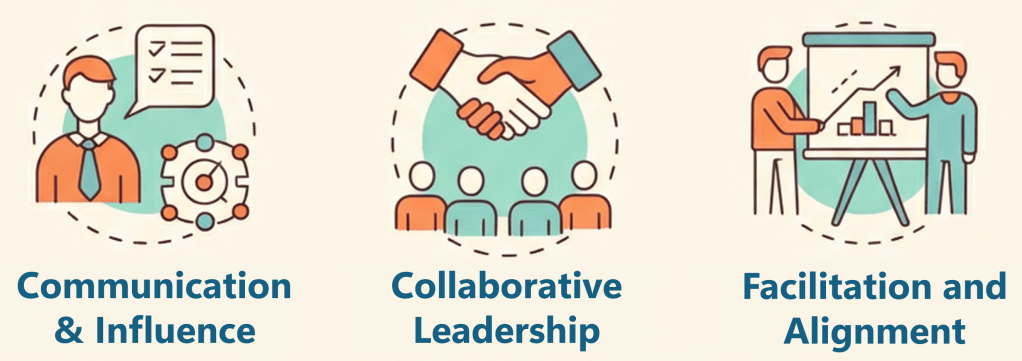
Communication & Influence: Mastering communication for stakeholder influence

  • Communication & Presentation Skills: Product managers must tailor their communication style to different audiences. When presenting to executives, they might focus on data-driven insights and ROI projections. When collaborating with engineers, they might delve into technical details and user stories. Emotional intelligence and empathy are also crucial for building strong relationships, understanding diverse perspectives, and navigating disagreements effectively.
  • Stakeholder Management: Effective stakeholder management ensures stakeholder alignment and reduces conflicts.
  • Negotiation & Conflict Resolution: Product managers should develop skills to navigate disagreements and maintain positive relationships.

Collaborative Leadership: Leading and motivating cross-functional teams

  • Cross-Functional Team Leadership: Effective cross-functional team leadership empowers product managers to motivate teams and achieve product goals. Effective product managers empower their teams by delegating responsibilities, providing autonomy, and recognising individual contributions. They foster a collaborative environment where open communication, constructive feedback, and shared decision-making are encouraged.
  • Meeting Management & Collaboration Tools: Effective meeting management techniques and collaboration tools improve team efficiency and communication.
  • Building Consensus & Alignment: Product managers should focus on ensuring a shared understanding of product goals.

Facilitation and Alignment: Driving shared understanding and agreement within the team

  • Facilitation Techniques: Use techniques like workshops, brainstorming sessions, and structured discussions to guide team conversations and effectively drive towards shared outcomes.
  • Cross-Functional Alignment: Proactively work to align different functional perspectives (e.g., engineering, marketing, sales) by clearly articulating the product vision, strategy, and roadmap.
  • Conflict Management and Resolution: Develop skills to effectively mediate conflicts and disagreements within the team, fostering a positive and productive working environment.

3 – Driving Continuous Improvement – Driving Innovation and Adaptability

In today’s dynamic market, continuous improvement through innovation and adaptability is essential for sustained success.

Tesla Example: Tesla uses over-the-air updates to continuously improve its products, demonstrating a commitment to ongoing value delivery.

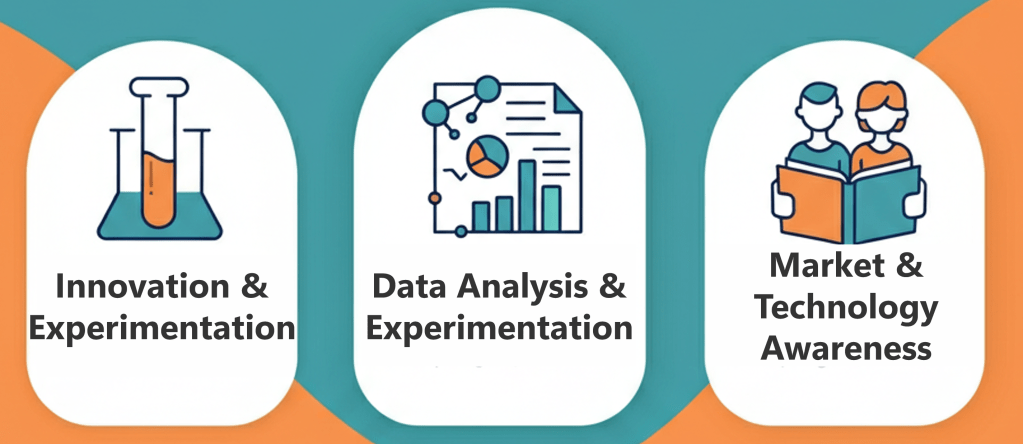
Innovation & Experimentation: Using data-driven approaches to validate ideas

  • Design Thinking & User-Centred Design: Applying design thinking ensures products are developed with a deep understanding of user needs.
  • Lean Startup & Agile Methodologies: Adopting lean startup and agile methodologies enables product managers to quickly test and validate ideas.
  • Data Analysis & Experimentation: Product managers should use data to optimise product performance (e.g., A/B testing landing pages). Continuous improvement relies on feedback loops and iterative development. Product managers should actively solicit customer feedback, analyse usage data, and conduct experiments to test and refine their products. For example, Amazon famously uses A/B testing to optimise its website and product pages, constantly experimenting with different layouts, messaging, and calls to action to improve conversion rates.

Market & Technology Awareness: Staying ahead of market trends

  • Emerging Technologies & Industry Trends: Staying informed about emerging technologies allows product managers to identify new opportunities and anticipate disruptions.
  • Competitive Monitoring & Benchmarking: Product managers should conduct competitive monitoring and benchmarking to gain insights into product strategy.
  • Continuous Learning & Knowledge Sharing: A commitment to continuous learning ensures product managers stay up-to-date with best practices.

4 – Measuring ROI: Demonstrating the Value of Product Management

Measuring product management activities’ return on investment (ROI) is crucial for demonstrating its value and securing continued support for these initiatives. However, as a Harvard Business Review study highlights, many executives lack confidence in accurately assessing product development ROI. This lack of confidence underscores the need for robust product management practices that track key metrics and demonstrate tangible impact. (HBR Analytic Services, 2019)
To effectively measure the ROI of your product management efforts, consider tracking these key areas:

Product-Specific Metrics:

  • Product Success Rate: The percentage of launched products that meet pre-defined success criteria (e.g., achieving target revenue, user adoption, or market share).
  • Time to Market: The time it takes to bring a product from ideation to launch, reflecting the efficiency of the product development process.
  • Customer Satisfaction: Measured through metrics like Net Promoter Score (NPS), Customer Satisfaction Score (CSAT), and customer reviews, indicating how well the product meets customer needs.
  • Feature Adoption Rate: The percentage of users adopting and actively using specific features, highlighting the value and effectiveness of product enhancements.
  • Revenue and Profitability: Track the direct revenue generated by the product, as well as its contribution margin and profitability.

Team-Related Metrics:

  • Team Performance: Assess the product team’s effectiveness through metrics like sprint velocity (in Agile development), on-time delivery, and achievement of sprint goals.
  • Employee Satisfaction and Retention: Measure employee engagement, satisfaction, and retention within the product team, reflecting the impact of leadership and development initiatives.

Customer-Focused Metrics:

  • Customer Acquisition Cost (CAC): The cost of acquiring a new customer that can be reduced through effective product-led growth strategies.
  • Customer Lifetime Value (CLTV): The predicted net profit attributed to a customer’s future relationship that can be increased through product enhancements and customer retention efforts.
  • Churn Rate: The rate at which customers stop using the product, indicating areas for improvement in product value or customer engagement.

By consistently tracking and analysing these metrics, product managers can demonstrate the tangible impact of their work, justify investment in product management capabilities, and drive continuous improvement within their organisations.

Elevate your product team and maximise your product development ROI. Contact me to discuss a customised training program.

Bibliography

Aulet, B. (2013). Disciplined Entrepreneurship: 24 Steps to a Successful Startup. HBR Press.

Gil, Elad. High Growth Handbook. Accessed via Stripe Atlas https://www.forbes.com/sites/quora/2012/12/10/does-stripe-have-product-managers-or-do-engineers-manage-the-products-themselves/

HBR Analytic Services. (2019). Closing the Data Gap in Product Development. Harvard Business Review.

Categories
Change Management Leadership

How to Make Change Stick in Your Organisation

Organisational transformations are complex undertakings, often involving significant changes to processes, systems, and culture. While the initial excitement and momentum can generate early wins, the real challenge lies in sustaining these changes and ensuring they become deeply embedded in the organisation’s DNA. To truly lock in your transformation investment and reap the long-term rewards, focus on these three critical areas:

Scenario: Imagine “Sunnies & Shades”, a fictional, mid-sized Aussie retailer specialising in sunglasses and prescription eyewear with stores across the country. They’re undergoing a significant transformation, aiming to shift from a traditional brick-and-mortar retailer to a more integrated online and offline experience. This shift involves a new e-commerce platform, in-store digital kiosks, and a revamped customer loyalty program. But like any good transformation, it’s not just about the initial launch; it’s about making those changes stick.

Build a Culture of “Always Improving”

A successful transformation requires a culture that embraces continuous improvement, where employees at all levels are empowered to identify opportunities, contribute ideas, and adopt new ways of working. This change can be particularly challenging when introducing new technologies or digital tools, as it requires a shift in mindset and a willingness to embrace change. Not only does this drive ongoing improvement and innovation, but it also helps attract and retain top talent who thrive in dynamic and forward-thinking environments.

  • Give Your People the Power: Empowering employees to participate in the transformation process is crucial because when individuals feel a sense of ownership and are actively involved in shaping the change, they are more likely to embrace it and contribute to its success. Empowerment means involving them in decision-making, encouraging them to share their ideas, and giving them the autonomy to experiment with new approaches. This involvement starts people planning how they will change what they do and positions them to be more prepared for the upcoming changes.
  • Get Feedback Regularly: Establish robust feedback mechanisms to gather insights from employees, customers, and other stakeholders. This feedback loop is essential for identifying areas for improvement, addressing concerns, and ensuring the transformation stays on track. By actively listening to feedback, organisations can make necessary adjustments and ensure the transformation remains aligned with the needs of the business and its stakeholders.
  • Never Stop Learning: Invest in ongoing training and development to equip your workforce with the skills and knowledge needed to thrive in the transformed organisation. This investment is vital because transformations often introduce new technologies, processes, and ways of working, for which employees need the capability to adapt and excel in this new environment. Learning can involve a combination of formal training programs, mentoring, online resources, and on-the-job coaching. Ideally, the change you implement has a ripple effect and can initiate further improvements. Introducing new technology can unlock further opportunities, which teams can capitalise on with appropriate learning.

For success, Sunnies & Shades needed comfortable and enthusiastic staff to use new digital tools to enhance the customer experience. Sunnies & Shades knew getting their team on board with their digital transformation was crucial. They set up staff forums and an online portal for feedback on the new systems, ran surveys, and held focus groups to ensure they considered and addressed everyone’s concerns. They also encouraged staff to experiment with the new technology and ran an internal competition to spark innovation. To top it off, they provided comprehensive training and ongoing support to ensure everyone felt comfortable using the new tools. The training acknowledged the value of previous ways of working while highlighting the benefits of the new processes to enable a smooth transition and minimising ambiguity.

Through developing a culture of continuous improvement, organisations can ensure that the changes implemented are not merely temporary fixes but become ingrained in their operations.

Make the Changes Stick

Transformations often involve significant changes to processes, systems, and behaviours. To ensure these changes are not just fleeting initiatives but become deeply embedded in the organisation, they must be reinforced and integrated into the fabric of everyday operations. This integration is essential because without consistent reinforcement, old habits can quickly resurface, and the momentum of the transformation can be lost. Crucially, this requires strong leadership buy-in and role modelling, with leaders actively demonstrating their commitment to the new ways of working.

  • Make it Part of Everyday Life: Integrate the changes into daily routines and workflows. This change can include updating job descriptions, redesigning workspaces, and incorporating new technologies into standard operating procedures. This integration is essential because it ensures that the new working methods become the norm rather than an exception.
  • Keep the Communication Flowing: Maintain open and transparent communication channels to inform employees about the transformation’s progress, address concerns, and celebrate successes. Consistent communication is crucial for building trust, maintaining momentum, and ensuring everyone is aligned with the transformation’s goals.
  • Shout Out Successes: Acknowledge and celebrate both big and small wins throughout the transformation journey to maintain momentum, build confidence, and reinforce positive behaviours. Celebrating successes reinforces the value of the transformation and motivates individuals to continue embracing the change.

For Sunnies & Shades, this meant making the new digital tools and processes a seamless part of their customer and employee experience. They went all-in on their digital makeover. They redesigned their stores with interactive kiosks for customers to try on glasses virtually and updated their staff uniforms to match their new vibe. To keep everyone in the loop, they held regular “sundowner” sessions and used their intranet to provide updates, informally discuss concerns and share success stories. The leadership team actively participated in these sessions to demonstrate their commitment to the transformation and used the new digital tools themselves. They also gave kudos to their “Digital Stars” – staff who nailed the new tech – and shared good customer feedback online.

Organisations can create a lasting legacy for their transformation efforts by planning steps to reinforce and embed the changes.

Track Your Progress

Establishing a robust measurement and monitoring framework is essential to ensuring your transformation is on track and delivering the desired results. This involves setting clear goals, tracking progress, and using data to inform decision-making. Tracking progress is crucial because it allows organisations to measure their efforts’ effectiveness, identify improvement areas, and demonstrate the value of the transformation to stakeholders.

  • Set Clear Goals: Define specific, measurable, achievable, relevant, and time-bound (SMART) goals for the transformation to provide a clear roadmap and a benchmark for measuring success. Clear goals provide direction and focus for the transformation, ensuring everyone is working towards the same outcomes.
  • Regularly Check In and Analyse: Regularly monitor and analyse performance data to assess the transformation’s effectiveness and identify improvement areas. Regular monitoring and analysis allow for adjustments to the transformation strategy and plan, ensuring it remains aligned with the evolving needs of the business.
  • Harness the Power of Data: Leverage technology to gain a comprehensive understanding of your transformation’s impact. Utilise data analytics platforms and business intelligence tools to track key metrics and visualise progress. This visualisation makes information accessible to stakeholders, facilitating focused discussions and informed decision-making. Ultimately, technology provides valuable insights into the transformation’s effectiveness and identifies areas for optimisation.

For Sunnies & Shades, tracking progress was crucial to understanding the impact of their digital transformation on key metrics like sales, customer satisfaction, and loyalty. Sunnies & Shades set clear goals for its transformation, like boosting online sales and growing its loyalty program. They used web analytics, in-store data, and an interactive business intelligence dashboard to keep tabs on their progress. Ready access to this information gave them a complete picture of how they were tracking and helped them spot any trends or areas for improvement in their monthly review meetings.

By diligently tracking progress, organisations can ensure their transformation stays on course and delivers the desired outcomes.

Conclusion

Transformations are not merely about implementing new initiatives; they are about creating lasting change. Organisations can lock in their transformation investments and reap long-term rewards by curating a culture of continuous improvement, embedding changes into daily operations, and diligently tracking progress.

Lessons from Sunnies & Shades – The Sunnies & Shades scenario highlights the importance of a holistic approach to transformation. Sunnies & Shades demonstrates how to successfully navigate the complexities of organisational change and build a sustainable future by actively involving staff, celebrating successes, and continuously adapting to the business’s evolving needs.

Categories
Delivery Leadership

Aligning Value, Teaming, and Objectives for Business Success

In today’s fast-paced business environment, aligning value, teaming, and objectives is crucial for success. This alignment ensures that every team member works towards a common goal, creating value for the organisation and its customers. Let’s explore how these three elements can be harmonised to drive success.

Value: The Core of Every Initiative

Understanding the “why” behind the work is fundamental to any successful business initiative. It starts with identifying the core purpose and the desired outcomes. This involves asking critical questions such as: What are we trying to achieve? Why is this important? How will it benefit our customers and the organisation?

Once the purpose is clear, defining success becomes the next step. Success should be tangible and measurable. For instance, it could be increased customer satisfaction, higher revenue, or improved operational efficiency. These success metrics need to be clearly articulated and communicated to the team.

Establishing a system for measuring and tracking progress ensures the team stays aligned with these goals. This could involve setting key performance indicators (KPIs) and regularly reviewing them to assess whether the team is on track. Tools like dashboards and progress reports can provide real-time insights into the team’s performance against the defined success metrics.

By understanding the reason behind the work, defining what success looks like, and establishing a robust system for measurement and tracking, teams can ensure that every effort is aligned with creating value for the organisation and its customers.

Teaming: Building a Cohesive Unit

Understanding the role the team plays in delivering the desired outcome is crucial for success. Each team member brings unique skills and perspectives that contribute to achieving the project’s goals. Recognising and leveraging these strengths is essential to create a cohesive unit that works seamlessly together.

To deliver the outcome, team members must understand how their contributions fit the bigger picture. This involves clear communication of roles and responsibilities and nurturing a collaborative environment where everyone feels empowered to share their ideas and feedback. Regular team meetings and retrospectives ensure everyone is aligned and working towards the same objectives.

Collaboration is key to success. Team members should be encouraged to work together, share knowledge, and support each other in overcoming challenges. This collaborative spirit helps build trust and ensures the team can adapt and respond effectively to changing circumstances.

“I once led a pilot team to prototype Agile ways of working within a traditional organisation. Our mission was clear: demonstrate that data solutions could be delivered faster, cheaper, and with greater customer engagement. The team was deeply committed to this purpose. We openly discussed how to collaborate effectively amongst ourselves and with other stakeholders. This pilot proved so successful that it sparked the creation of numerous other Agile teams across the organisation.”

This example illustrates how a shared purpose and open communication can empower a team to achieve remarkable results and drive organisational change.

Identifying the customer and understanding their needs is another critical aspect of effective teaming. The team should clearly understand who the customer is and what they expect from the project. This involves regular interactions with the customer to gather feedback and ensure that the team’s efforts are aligned with the customer’s requirements.

Additionally, the team needs to interact and integrate with other stakeholders and departments to deliver success. This could include working closely with marketing, IT, and customer service teams to ensure that all aspects of the project are covered and that there is a unified approach to achieving the project’s goals.

By understanding the team’s role, fostering collaboration, and maintaining clear communication with the customer and other stakeholders, teams can build a cohesive unit that is well-equipped to deliver successful outcomes.

Objectives: Setting Clear and Achievable Goals

Clear and achievable objectives are the foundation of any successful project. Objectives provide direction and a sense of purpose, helping teams stay focused and motivated. In Agile, objectives are often defined as user stories or epics, which outline the desired outcomes and the steps needed to achieve them.

When setting objectives, ensure they are specific, measurable, achievable, relevant, and time-bound (SMART). This approach helps teams understand what is expected of them and how their efforts contribute to the project’s overall success. Regularly review and adjust objectives to align with the organisation’s values and the team’s capabilities.

The Synergy of Value, Teaming, and Objectives

The true power of alignment lies in the synergy between value, teaming, and objectives. When these elements are harmonised, teams can work more efficiently and effectively, delivering high-quality results that drive success. Organisations can create a continuous improvement and innovation culture by focusing on value, building strong teams, and setting clear objectives.


In conclusion, aligning values, teaming, and objectives is essential for achieving success in today’s dynamic business environment. By prioritising value, fostering effective teaming, and setting clear objectives, organisations can ensure that every effort contributes to their overall goals. This alignment drives success and creates a positive and productive work environment where teams can thrive.

Categories
Change Management Delivery Leadership

Digital Transformation Success: Key Steps and Remember the People

Digital change is no longer a choice; it’s a necessity. In today’s fast-paced business environment, staying competitive and relevant hinges on embracing digital transformation. But navigating this ever-evolving landscape can feel overwhelming. To truly succeed, organisations need to focus on three core elements: understanding their people, being clear on what they are trying to change, and having a plan.

1. Understand Your People: The Heart of Digital Transformation

Before diving headfirst into new software or platforms, take a step back and truly understand your people. It’s crucial to know what they do. Understand what they think the purpose of their work is. Learn what their daily tasks involve. This understanding will help you determine if what they are trying to do is needed. You may find an opportunity to eliminate a process. You might automate it entirely or make the human intervention more valuable.

  • Empathy is Key: Observe how your employees currently work. Understand their pain points, what they do not want to change, and why. Identify areas where technology can streamline tasks, reduce frustration, and unlock more significant potential.

For example, consider a financial institution implementing a new digital loan processing workflow. Initially, employees resisted the change, fearing it would complicate their tasks. The institution’s leadership conducted interviews. They observed the employees’ daily routines. They discovered that employees struggled with redundant data entry and cumbersome approval processes. The employees’ workload was significantly reduced by introducing an automated system that eliminated these inefficiencies. This change improved job satisfaction. It also sped up the loan approval process. Both the staff and the customers benefited from these improvements.

  • Purpose and Motivation: Engage with your employees to understand what they think the purpose of their work is. This engagement is not just a conversation, it is an essential tool in building your strategy. It’s a way to involve your staff in the digital transformation process, making them feel more connected and motivated. Knowing their motivations can help align digital transformation efforts with their goals and aspirations.
  • Tool Preferences: Find out why employees like or dislike their current tools. This insight can guide the selection of new tools that better meet their needs and preferences. To gather this information, consider using surveys or focus groups. Surveys can provide quantitative data on employee satisfaction with current tools. Focus groups can offer deeper qualitative insights by allowing employees to discuss their experiences and preferences in more detail. Be aware of peer pressure and groupthink when collecting data, look for outliers and trends and try to understand the root cause of each.
  • Concerns and Aspirations: Listen to your employees’ concerns and aspirations. Address their worries about the changes and highlight how the new technology can help them achieve their professional goals. This will make them feel valued and considered, enhancing security and trust in the process.
  • Collaboration is Crucial: Involve your team in the digital transformation process. Seek their input, address their concerns, and ensure they feel heard and valued throughout the transition. This will make them feel involved and integral to the change, increasing a sense of ownership and commitment.
  • Training is Essential: Provide comprehensive training. Offer ongoing support to equip your employees. They need skills and confidence to thrive in the new digital environment. Implement varied training methods, such as interactive workshops, online courses, and one-on-one coaching sessions, to cater to different learning needs. This multifaceted approach ensures that all employees feel well-equipped and confident, creating a sense of empowerment and readiness for the change. Equally important is involving key team members in co-developing the training programs. This collaboration ensures that the training addresses real, rather than perceived, needs and incorporates practical insights from those who understand the day-to-day challenges. Ongoing support, including regular check-ins and a dedicated helpdesk, will encourage a culture of continuous learning and adaptation, which is crucial for long-term success.

By prioritising your people and understanding their work, you’ll create a culture of adoption. This will lead to innovation. These efforts drive the success of your digital transformation.

2. Be Clear on What You Want to Change: Laying the Groundwork for Transformation

Before embarking on a digital transformation journey, it is crucial to know exactly what needs to be changed. Understanding why these changes are necessary is equally important. This clarity will ensure you address the right problems with the right solutions, setting the stage for a successful transition.

  • Identify Where Change is Needed: Conduct a thorough process audit to pinpoint inefficiencies and areas requiring improvement. Understanding these core issues will help determine the necessary changes and ensure they address the real problems.
  • Articulate What Needs to Change: Before implementation, carefully evaluate potential solutions. Ensure the chosen technology or process changes are the best fit for your organisation’s needs and objectives. Clearly communicate the specific changes required and how they will be implemented. Make sure everyone knows exactly what is being asked of them.
  • Understand the Impact on People: Understand and explain the impact of these changes on your team, workflows, and overall operations. Be prepared to address any challenges that may arise during the transition. Articulate how addressing these issues will benefit the organisation and improve workflows while enhancing individual roles. This ensures everyone understands the positive impact the changes will have on their work.
  • Consider the Implications: Fully understand what will be involved in making these changes. Consider the impact on your team, workflows, and overall operations. Be prepared to address any challenges that may arise during the transition period.
  • Set Clear Objectives: Communicate the specific objectives of any changes and how they will impact individuals within the organisation. For instance, explain how a new digital tool will streamline their daily tasks, reduce manual errors, or enhance their productivity. Clearly defined objectives should resonate at a personal level, making it evident how these changes will benefit them directly.

For example, success may look like a smoother workflow with fewer manual interventions. When employees understand the transformation’s personal advantages, they are more likely to embrace and champion the change and provide feedback on modifications to drive further refinement and improvement.

Be clear on what you want to change and know why it is essential. This ensures you solve the right problem with the right solution. This foundational step is essential before planning and engaging your team in the transition process.

3. Have a Plan: Mapping the Route to Success

Digital transformation requires a well-defined roadmap. A clear plan is essential to ensure a smooth transition and minimise disruption.

  • Outline Key Milestones: Break down the transformation process into manageable phases with specific goals and deadlines for each stage.
  • Define Roles and Responsibilities: Identify who is responsible for each aspect of the transformation and ensure everyone understands their role in the process.
  • Establish Communication Channels: Determine how information will be shared and feedback gathered throughout the transformation journey.
  • Develop a Training and Support Strategy: Provide resources and support to help employees adapt to the new technology and processes.
  • Measure Success: Define key performance indicators (KPIs) that align with your transformation objectives. Regularly evaluate your progress against these metrics. Create a clear pathway for your team. Actively manage the transformation process. This approach will set your team up for success and minimise potential roadblocks.

In conclusion, navigating digital change requires a strategic approach. It should prioritise understanding your people. It is essential to define clearly what needs to be changed. Having a well-structured plan is also crucial. By focusing on these three core elements, organisations can create a culture of adoption. This approach encourages innovation. It ensures a successful digital transformation. Remember, the heart of any transformation lies in the people who drive it. Engage with your employees, address their concerns, and provide the necessary support to empower them in this journey. With a clear vision and a collaborative effort, digital change can significantly improve efficiency, customer engagement, and overall business success.

Categories
Agile success principles Change Management Leadership

Driving Innovation Through Effective Leadership

In today’s fast-paced and ever-evolving business landscape, innovation and creativity are more critical than ever for maintaining a competitive edge. However, achieving these goals requires more than just a spark of genius; it demands a strategic alignment of leadership, structure, and continuous improvement. This article will delve into how effective leadership can foster innovation, the importance of balancing structure with flexibility, and the role of continuous improvement in driving sustained success. By understanding and implementing these fundamental principles, organisations can create an environment where innovation thrives and creativity flourishes.

The Role of Leadership in Fostering Innovation

The rapidly evolving business landscape requires innovation, which is the key to staying ahead of the competition. Effective leadership plays a pivotal role in fostering an environment where innovation can thrive. Here are three essential ways leaders can drive innovation within their organisations.

  1. Creating a Culture of Trust and Collaboration – Trust and collaboration are the cornerstones of an innovative culture. Leaders must create an environment where employees feel safe sharing their ideas and taking risks. This involves open communication, encouraging teamwork, and recognising the contributions of all team members. When employees trust their leaders and colleagues, they are more likely to collaborate and develop creative solutions to problems.
  2. Providing Resources and Support for Professional Development – Investing in employees’ professional development is another critical aspect of fostering innovation. Leaders should provide resources for continuous learning, such as training programs, workshops, and access to industry conferences. By supporting their team’s growth, leaders can ensure that employees stay up-to-date with the latest trends and technologies, which can lead to innovative ideas and solutions.
  3. Leading by Example and Encouraging Experimentation – Leaders willing to experiment and embrace new ideas set a powerful example for their teams. By leading by example and showing that they are open to change and innovation, leaders can inspire their teams to do the same. Encouraging experimentation and allowing failure as a learning opportunity can lead to breakthrough innovations and continuous improvement.

Balancing Structure and Flexibility

While structure provides a solid foundation for an organisation, flexibility is essential for adapting to new opportunities and challenges. Striking the right balance between structure and flexibility can drive innovation and creativity.

  • Creating a Dynamic Learning Environment – A dynamic learning environment encourages employees to learn and grow continuously and requires providing opportunities for skill development and creating a culture where learning is valued. By balancing structure with flexibility, organisations can create an environment that promotes creativity, critical thinking, and engagement.
  • Adapting to Changing Needs – In today’s fast-paced world, organisations must be able to adapt to changing needs. This requires a balance between a structured approach to strategy and being flexible enough to pivot when necessary. By maintaining a solid framework of policies and processes while also being agile, organisations can innovate and respond to new opportunities and challenges.
  • Enhancing Team Collaboration – Effective teamwork often requires a balance between structure and flexibility. A well-defined structure provides a framework for team members to collaborate efficiently, ensuring everyone understands their roles and responsibilities. At the same time, flexibility allows team members to bring their unique perspectives and ideas to the table, fostering innovation and creativity.

Measuring Success and Continuous Improvement

Organisations must continuously measure their progress and adjust as needed to ensure the success of innovation efforts. This involves utilising key performance indicators (KPIs), implementing the Plan-Do-Check-Act (PDCA) cycle, and nurturing a culture of continuous improvement.

  • Utilising Key Performance Indicators (KPIs) – KPIs are essential for tracking the effectiveness of continuous improvement initiatives. They provide quantifiable metrics that offer insights into process efficiency, effectiveness, and overall success. By selecting the right KPIs, organisations can monitor progress, identify areas for improvement, and make data-driven decisions.
  • Implementing the PDCA Cycle – The Plan-Do-Check-Act (PDCA) cycle is a widely used methodology for continuous improvement. It involves planning changes, implementing them on a small scale, checking the results, and acting based on the findings. This iterative process helps organisations continuously refine their strategies and achieve better results. By following the PDCA cycle, organisations can systematically identify areas for improvement, test potential solutions, and implement the most effective changes, thereby driving continuous improvement and innovation.
  • Nurturing a Culture of Continuous Improvement – Success in continuous improvement requires a culture that values ongoing learning and adaptation. Organisations should encourage employees to identify opportunities for improvement, experiment with new ideas, and share their findings. This culture of continuous improvement helps organisations stay agile and responsive to changing needs.

In conclusion, establishing and embedding innovation within an organisation requires effective leadership, a balance between structure and flexibility, and a commitment to continuous improvement. By creating a culture of trust and collaboration, providing resources for professional development, and leading by example, leaders can inspire their teams to innovate. Balancing structure with flexibility allows organisations to adapt to changing needs and enhance team collaboration. Finally, measuring success and nurturing a culture of continuous improvement ensures that innovation efforts are sustained and effective. Organisations can drive innovation and creativity by focusing on these critical areas, leading to long-term success.

Categories
Agile success principles Delivery Leadership Portfolio Management

Maximizing Delivery Success: The Power of Visibility, Proactive Dependency Management, and Strategic Roadmap Planning

In the fast-paced realm of program delivery, navigating interdependencies, anticipating upcoming challenges, and maintaining transparency across all levels of an organisation is crucial. This article explores the essential elements of effective delivery portfolio management: visibility, active dependency management, and a comprehensive upcoming roadmap, highlighting their significance in achieving success in delivering strategic outcomes.

Visibility: The Foundation of Trust and Alignment

Visibility in program and project management extends beyond tracking tasks. It involves providing clarity and transparency of program status, progress, and challenges to ensure every team member, stakeholder, and leader can access real-time information. This transparency is pivotal in nurturing trust, enabling informed decision-making, and aligning efforts towards strategic objectives. Tips to enhance visibility include:

  1. Implement Visual Management Systems: Utilise tools and platforms that offer real-time visibility into project statuses, progress, and challenges. For example, creating dashboards displaying key performance indicators (KPIs) and project milestones can assist stakeholders in staying informed and making data-driven decisions. These tools include Jira (Atlassian) and Azure DevOps (Microsoft). They are lightweight, cost-effective, and easy to scale across teams.
  2. Regular Planning Sessions and Stand-ups: Embrace agile practices such as fortnightly planning sessions and daily stand-ups to increase team transparency and alignment. This approach enables teams to align priorities and manage workloads effectively, creating a culture of openness and continuous improvement.
  3. Regular Planning Sessions and Stand-ups: Embrace working practices such as fortnightly planning sessions and daily stand-ups to increase team transparency and alignment. This approach enables teams to align priorities and manage workloads effectively. When incorporated with other practices that showcase work to obtain feedback and reflection to drive continuous improvement, teams go from being busy to delivering the right value.
  4. Mission Control Spaces: Establish dedicated visual management boards where project information is consolidated and centrally accessible. These boards provide easily understood information on progress, risks, and dependencies. Such physical or virtual boards create a single source of truth for always on project status, facilitating better decision-making and problem-solving. Examples of effective tools are Jira Align (Atlassian) and Miro.

Active Dependency Management: Navigating the Web of Interdependencies

Active dependency management involves proactively identifying, tracking, and resolving dependencies between tasks, teams, and resources to prevent bottlenecks and delays. The challenge lies in systematically identifying and resolving these interdependencies, necessitating a proactive stance to anticipate potential issues and devise mitigation strategies. Understanding each role and responsibility is crucial for effective dependency management to ensure unforeseen interdependencies do not derail projects.

  1. Map and Monitor Dependencies: Develop a systematic approach to identifying and tracking dependencies across projects. Tools like Jira Align can help visualise and manage dependencies to address potential bottlenecks proactively.
  2. Cross-Functional Collaboration: Nurture a culture of collaboration across different teams and departments. Encourage regular cross-functional meetings to discuss dependencies, share insights, and develop joint risk mitigation strategies. Approaches can also include co-creating solutions and leveraging shared resources to overcome challenges.
  3. Build an organisation around the flow of work: Organise teams into agile Tribes (programs) and Squads (teams) aligned around common objectives while minimising dependencies. This structure promotes autonomy and faster decision-making and reduces the complexity of managing interdependencies.

Upcoming Roadmap: Charting the Course Forward

An upcoming roadmap is not just a document outlining future directions; it’s a strategic tool that guides teams, clarifying priorities and expectations. It ensures that all efforts are aligned with strategic goals, facilitating a unified approach to achieving them. The roadmap serves as a beacon, guiding teams through the complexities of project delivery and ensuring that every step contributes towards the overarching objectives. Aligning the business roadmap with customer journeys and strategic initiatives is crucial for delivering value and securing a competitive advantage.

  1. Co-create roadmaps: Engage key stakeholders in the roadmap creation process to ensure strategic goals and priorities are aligned. This collaborative approach ensures that the roadmap reflects the organisation’s collective vision and objectives, enhancing buy-in and commitment.
  2. Quarterly Business Reviews (QBRs): Conduct QBR planning sessions to review progress against the roadmap, adjust priorities based on new insights, and set clear objectives for the upcoming quarter. This iterative process allows flexibility in responding to changes and ensures the roadmap remains relevant and aligned with strategic goals.
  3. OKRs and Performance Metrics: Implement Objectives and Key Results (OKRs) to link strategic goals with specific, measurable outcomes. This goal-setting framework helps track progress against the roadmap, ensuring efforts focus on achieving high-impact results.

In summary…

Visibility, active dependency management, and a well-defined forward-looking roadmap are crucial for successfully managing a delivery portfolio. These elements enhance operational efficiency and develop a culture of transparency, collaboration, and strategic alignment. By prioritising these aspects, organisations can navigate the complexities of project delivery with greater agility and predictability, ultimately driving better outcomes and value.

Categories
Dispersed Teams Leadership Remote working

What I have learnt managing people remotely

The first person I ever managed was someone I never met or saw. I have continue to manage people remotely since. Here are some learning. https://medium.com/adaptovate/what-i-have-learnt-managing-people-remotely-1e69de49805c